

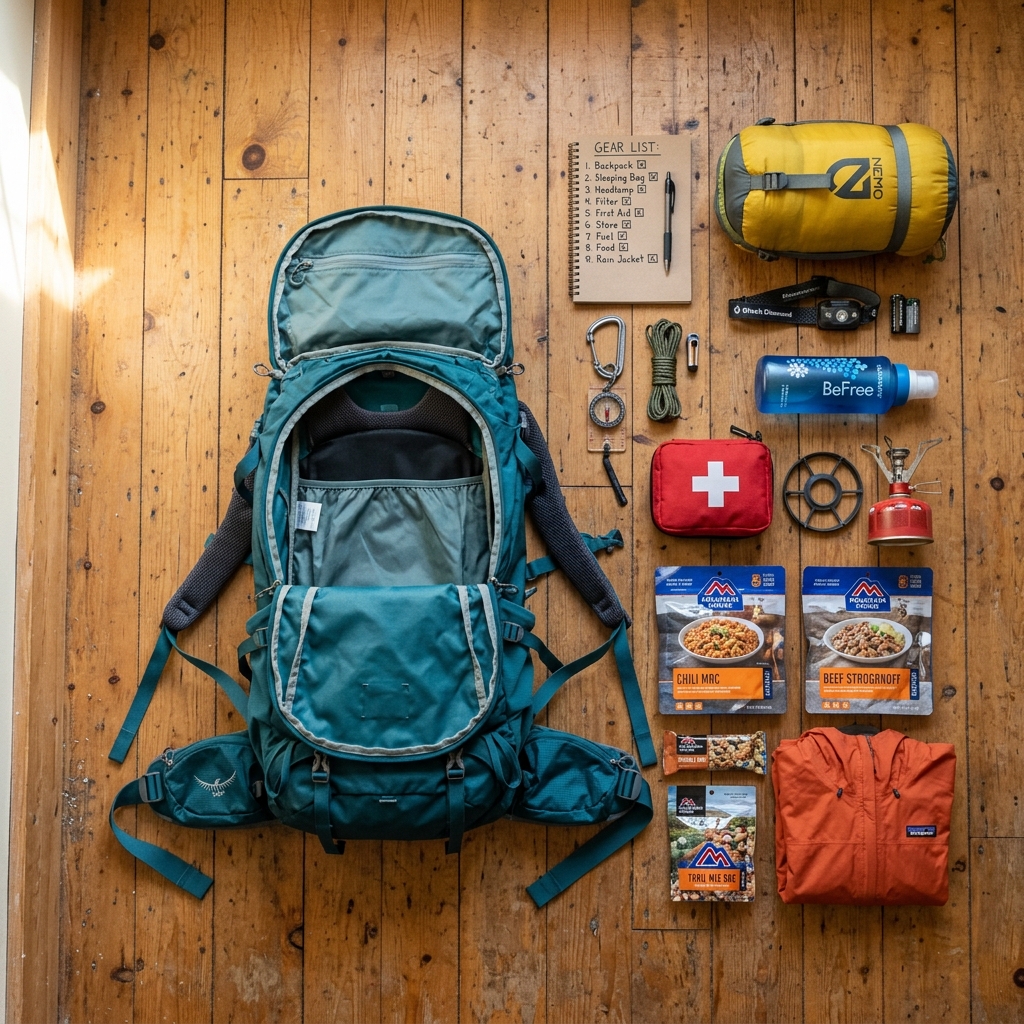
The internet is full of camping checklists that tell you to bring 47 items for a 2-night trip to a campground with flush toilets. This isn't that list.
This checklist is organized by what actually matters and scaled to the kind of trip you're likely taking. We've separated the essentials from the nice-to-haves, so you can make intelligent choices based on your destination, trip length, and conditions.
The Ten Essentials
The Ten Essentials originated with The Mountaineers in the 1930s and have been refined over decades. These are the categories — not specific items — that should be covered on every outdoor trip, regardless of length or difficulty.
| Essential | Examples |
|---|---|
| Navigation | Downloaded offline map (Gaia GPS, AllTrails), compass |
| Sun protection | Sunscreen (SPF 30+), UV sunglasses, sun hat |
| Insulation | Extra layers appropriate to coldest expected conditions |
| Illumination | Headlamp + spare batteries |
| First-aid supplies | Pre-assembled kit |
| Fire | Lighter, waterproof matches, fire starter (e.g. firestarter cubes) |
| Repair tools & knife | Multi-tool or knife, duct tape, gear repair kit |
| Nutrition | Extra day of emergency food beyond your planned meals |
| Hydration | Water + filter or purification method |
| Emergency shelter | Emergency bivy, space blanket, or knowledge of your tent's location |
Don't skip these because you're going to a developed campground. Conditions change and people get separated from their gear.
Shelter
- Tent with poles, stakes, and rain fly (verify all parts are packed before leaving home)
- Tent footprint or ground cloth (extends tent floor life significantly)
- Guylines and extra stakes for windy conditions
Tip: Do a full tent setup in your backyard before the trip to confirm you have every piece and know how to pitch it.
Sleep System
- Sleeping bag (temperature rated appropriately — see our gear guide)
- Sleeping pad (foam or inflatable)
- Lightweight camp pillow (or stuff sack filled with clothes)
- Liner (silk or fleece liner adds 5–15°F to bag rating)
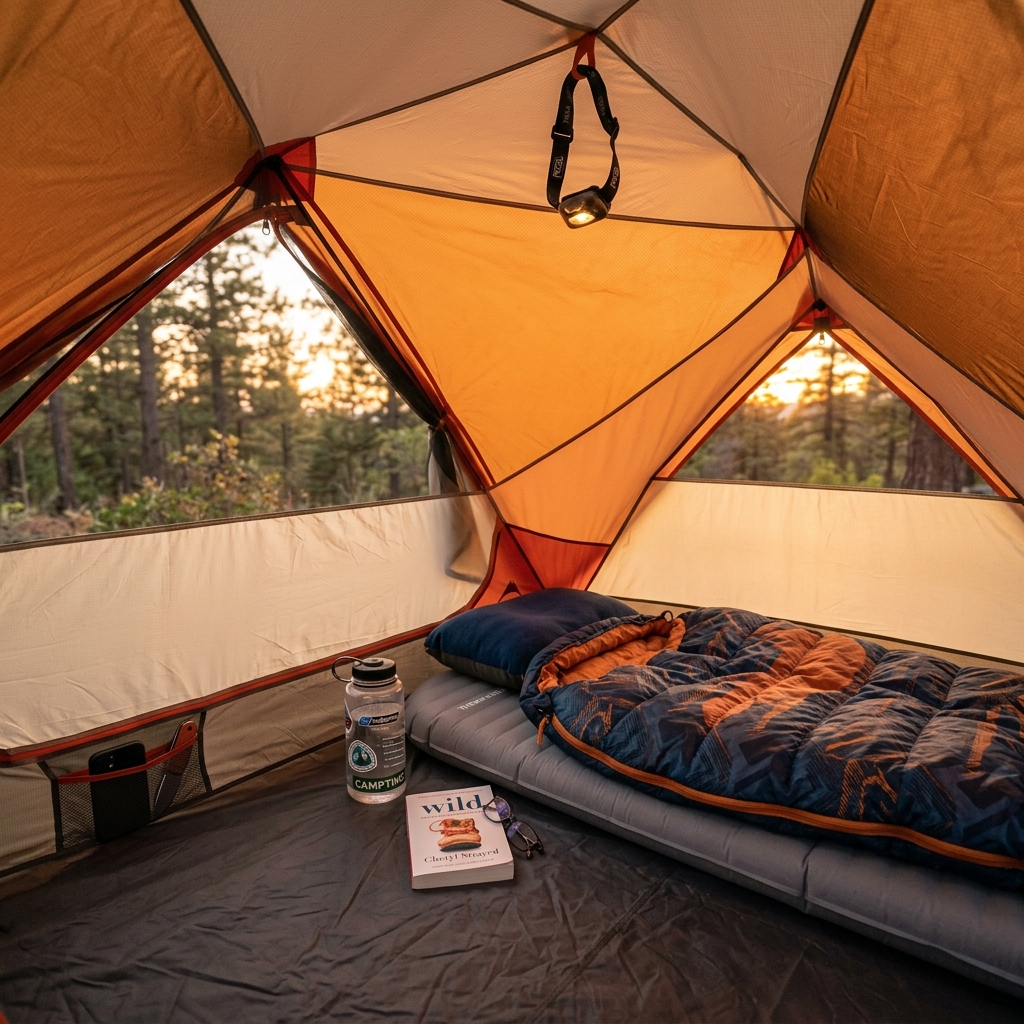 Everything in its place. The loop at the top is for your headlamp — charge it before you sleep.
Clothing (3-Night Trip in Variable Conditions)
On your body:
- Moisture-wicking base layer top and bottom (synthetic or merino — no cotton)
- Hiking pants or shorts
- Hiking socks (min 2 pairs — blister prevention depends on fresh socks)
- Hiking boots or trail runners
In your bag:
- Mid-layer (fleece jacket or synthetic puffy)
- Wind/rain jacket (waterproof, breathable)
- Rain pants
- Extra base-layer set for sleeping
- Camp shoes or sandals (your feet will thank you)
- Beanie and gloves (even in summer for mountainous areas)
- Sun hat or baseball cap
- Swimsuit if near water
Food & Water
Water:
- Water filter (Sawyer Squeeze, MSR TrailShot) or purification tablets
- 2+ liters carry capacity per person (hydration bladder, Nalgene, or bottles)
- Electrolyte packets (Liquid IV, Nuun) for hot weather
Cooking:
- Camp stove + fuel canister (check fuel level before leaving)
- Pot with lid
- Utensil set (spork, spatula if cooking over fire, camp knife)
- Camp mug or insulated bottle for hot drinks
- Lightweight cutting board
- Biodegradable dish soap + small sponge
- Collapsible wash basin
Food Planning:
- Breakfast × nights (oatmeal, granola, instant grits, egg powder)
- Lunch × days (nut butter, crackers, jerky, hard cheese, trail mix)
- Dinner × nights (freeze-dried meals, pasta, rice dishes, ramen)
- Snacks (trail mix, bars, nuts, dried fruit — err on more than less)
- Emergency extra day of food
Storage:
- Bear canister (required in many areas) or plan to use provided bear boxes
- Stuff sack for hanging food if bear boxes unavailable
- Zip-lock bags for individual meals and food separation
First Aid & Safety
- First aid kit — see full list in our safety guide
- Personal medications (including EpiPen if applicable)
- Blister kit (moleskin, hydrocolloid bandages, needle for draining)
- Sunscreen (SPF 30 minimum)
- Insect repellent (DEET or Picaridin for tick-heavy areas)
- Emergency whistle
- Signal mirror
- Emergency space blanket
Communication:
- Fully charged phone + external battery bank
- Satellite communicator (Garmin inReach, SPOT) for remote locations
- Camp emergency plan shared with someone at home
Tools & Repair
- Multi-tool or knife
- Duct tape (wrap a small amount around a water bottle — no need to bring the full roll)
- Tent repair patches (usually included with tent)
- Gear ties / bungee cords
- Paracord (useful for bear hangs, clothesline, emergency fixes)
- Trowel (for cat holes where no toilet exists)
Hygiene & Leave No Trace
- Biodegradable soap
- Toothbrush and toothpaste
- Toilet paper in zip-lock bags + small trowel
- Hand sanitizer
- Trash bags (minimum 2 — one for trash, one for recyclables/wet items)
- Small camp towel (quick-dry microfiber)
- Menstrual products if needed
- Baby wipes (the single most appreciated item on a multi-day trip)
Note: Toothpaste, sunscreen, and lip balm count as scented items for bear safety. Store them with your food.
Comfort & Nice-to-Have
These aren't essential, but they make trips notably better:
- Camp chair (lightweight folding or packable)
- Small lantern or string lights for ambiance
- Books, cards, or camp games
- Journal
- Binoculars for wildlife and star watching
- Insoles or extra arch support for hiking boots
Car Camping vs. Backpacking: The Key Differences
For car camping, weight doesn't constrain you. Comfort items, larger food options, and cast iron cookware are all fair game.
For backpacking, every ounce matters. The checklist above applies, but each item gets evaluated through a weight-to-utility lens. A typical backpacking base weight (everything except water, food, and fuel) is 15–25 lbs for beginner to intermediate setups and 8–12 lbs for experienced ultralight setups.
Pre-Trip Checklist
Before leaving home:
- Check fire restrictions for your destination
- Verify campsite reservation or permit
- Download offline maps to your phone
- Check weather forecast
- Share your trip plan with someone at home (location, return date, what to do if you don't check in)
- Charge all electronics
- Do one full tent setup in your yard if it's a new tent
You will forget something on your first trip. Everyone does. Keep notes after each trip on what you wished you'd had, and build your personal checklist from there. The list above is a comprehensive starting point — not a mandate to pack every single item for every single trip.