

Most camping trips never involve a bear encounter, a lightning strike, or a medical emergency. But the campers who stay safest are those who understand the risks before they happen — not during.
This guide covers the real safety issues in camping based on what actually injures and kills people in the outdoors. We'll cover what to prevent and how to respond when prevention falls short.
Wildlife: The Reality vs. The Fear
Bears
Black bears and grizzly bears require different responses in an attack, but the most effective bear safety strategy is identical for both: never give a bear a reason to approach your camp.
Food Storage — The Most Important Rule Bears associate human scent with food. Once a bear is rewarded with human food, it becomes "food-conditioned" — and food-conditioned bears are almost always eventually euthanized. Your food storage habits directly affect bear populations across your entire area.
The rule: if it smells, store it securely. Food, garbage, toiletries (including toothpaste, sunscreen, lip balm), cooking equipment with food residue, and empty wrappers all count. Everything goes in your car trunk, a provided bear box, or an approved bear canister when not actively being used.
Never store food or scented items in your tent.
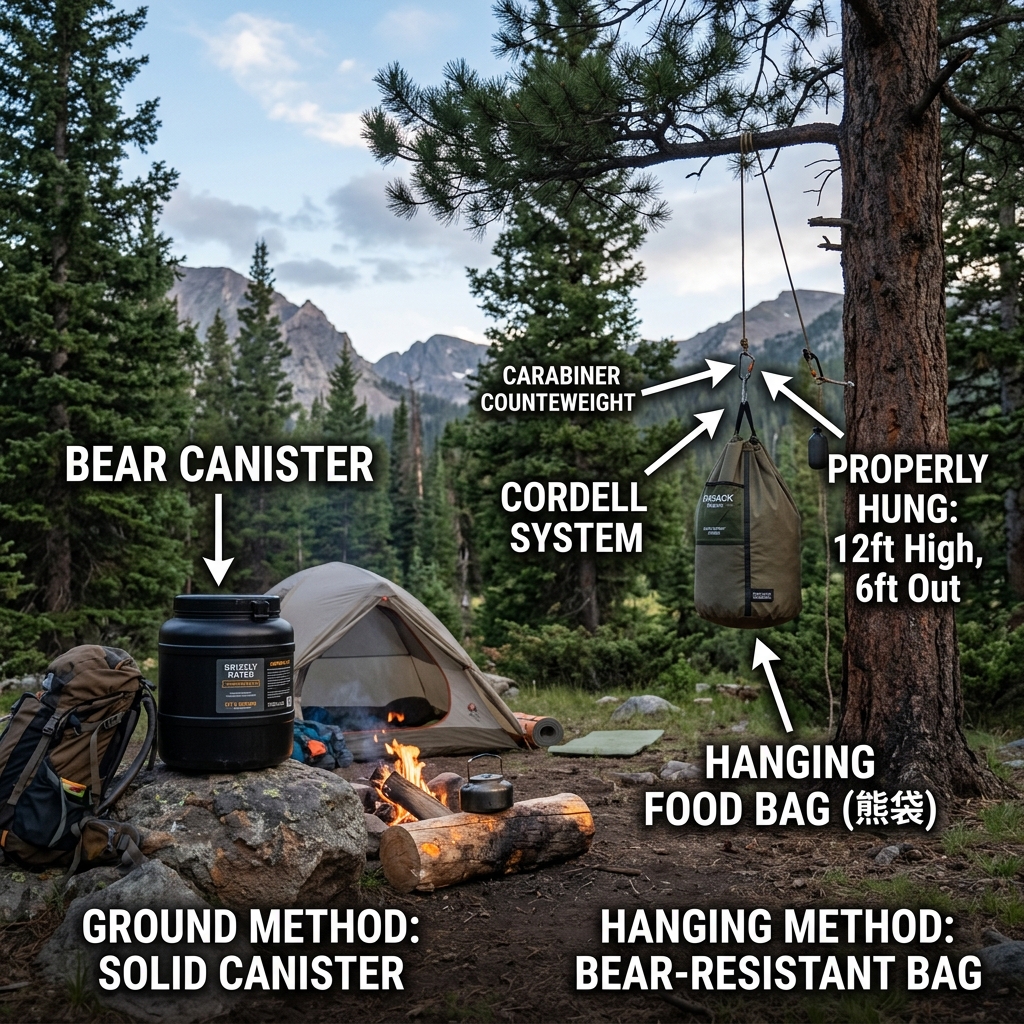 Bear canisters (required in many wilderness areas) and bear boxes (provided at most National Park campgrounds) are the two standard food storage solutions.
If You See a Bear at Camp
- Speak in a calm, firm voice — make yourself known without surprising the bear
- Never run — running triggers predatory response in bears and most large predators
- Group up if with others and make yourselves appear large
- Give the bear a clear escape route and space to use it
- If a bear enters your tent while you're in it, fight back aggressively — predatory attacks on sleeping humans are extremely rare but require active resistance
Bear Spray Studies consistently show bear spray stops aggressive encounters more reliably than firearms. In grizzly country, carry it accessible on your hip or chest strap — not buried in your pack. Know how to operate it: safety off, hold at an angle toward the ground, deploy when the bear is 30–60 feet out.
Mountain Lions
Encounters are rare. If approached: maintain eye contact, appear large, speak firmly, back away slowly. Never turn and run. If attacked, fight back aggressively — playing dead does not work with mountain lions.
Snakes
Most snakebites occur when people fail to look before stepping or reaching. Check before sitting on rocks or logs. Shake out boots and clothing left on the ground. Watch where you step in rocky or brushy areas during warm weather. Rattlesnakes typically warn before striking — respect the warning and give them space.
If bitten: immobilize the affected limb below heart level, move toward medical care as quickly as possible. Do not cut and suck the wound, apply a tourniquet, or use ice. These measures cause additional harm.
Weather: The Most Consistent Danger in the Outdoors
Lightning
Lightning is consistently underestimated. In mountainous areas, afternoon thunderstorms form rapidly — often within an hour.
The 30-30 Rule: If lightning flash to thunder is 30 seconds or less (storm within 6 miles), move to shelter immediately. Stay sheltered for 30 minutes after the last thunder.
When lightning approaches:
- Get off exposed ridges, peaks, and broad open areas — do this before the storm is directly overhead
- Avoid lone trees, clifftops, or open water
- Move into dense uniform forest — shorter trees of even height are safer than isolated tall ones
- Get away from metal: tent poles, trekking poles, frame packs
- If caught completely in the open, crouch on the balls of your feet with feet together and minimize ground contact — do not lie flat
Hypothermia
Hypothermia — dangerous lowering of core body temperature — does not require freezing temperatures. It can occur in 50°F weather with wet clothing and wind. The dangerous combination is cold + wet + wind.
Early signs: shivering, coordination problems, confusion, slurred speech, pale or bluish skin.
Prevention:
- Get wet clothing off immediately and replace with dry insulation
- Eat and drink regularly — calorie and fluid deficit accelerates heat loss significantly
- Set up shelter before you need it, not when you're already wet and cold
Treatment: Move person to shelter, replace wet clothing with dry, place in a sleeping bag, apply heat to neck, armpits, and groin. Provide warm (not hot) liquids if the person is alert and can swallow safely. Severe hypothermia (loss of coordination, unresponsiveness) requires emergency evacuation.
Heat Illness
Heat exhaustion and heat stroke kill more people in the outdoors than most wildlife combined.
Heat Exhaustion: Heavy sweating, weakness, pale/clammy skin, nausea, rapid weak pulse, possible fainting. Move to shade, cool with water, hydrate with electrolytes.
Heat Stroke: High body temperature (103°F+), hot/dry/red skin, rapid strong pulse, confusion or unconsciousness. This is a medical emergency. Cool immediately (ice or cold water to neck, armpits, groin) and evacuate. Do not give fluids to an unconscious person.
Prevention: hike early or late in hot weather, hydrate with electrolytes (not just plain water), take shade breaks, never push through warning signs of heat exhaustion.
Fire Safety
Wildfires in the US burn millions of acres annually, and human-caused ignition is a significant contributor. Campfire safety is a shared responsibility.
Before lighting any fire:
- Check current fire restrictions — restrictions change with conditions. airnow.gov and the US Forest Service website publish current restrictions by area.
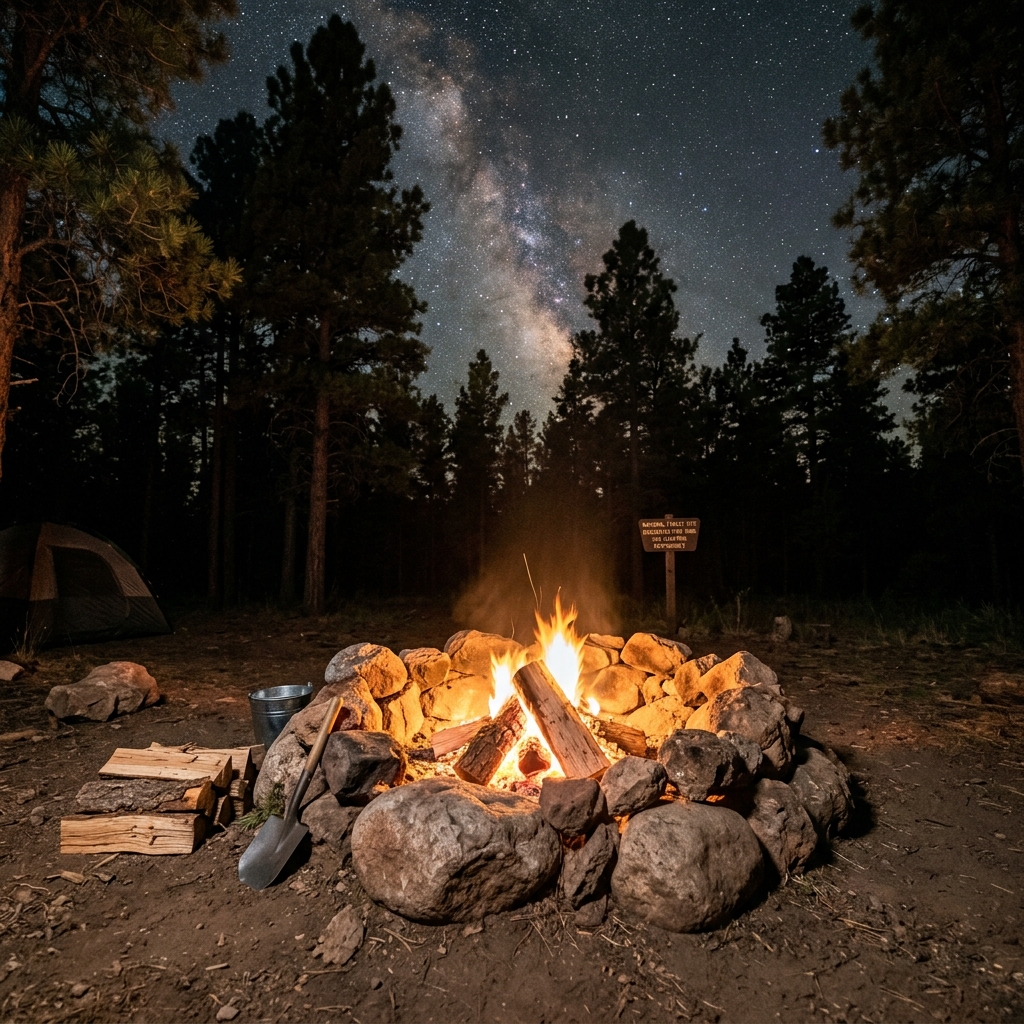
- Build fires only in designated fire rings where they exist — never on bare ground in non-designated areas
- Keep fires small — a 2-foot diameter fire is sufficient for cooking and warmth
While burning:
- Never leave a fire unattended, even briefly
- Keep a bucket of water or shovel nearby
- Don't burn trash, plastics, aerosol cans, or treated wood
Extinguishing completely:
- Pour water on the fire — use significantly more than seems necessary
- Stir the ashes and coals while continuing to add water
- Test by holding the back of your hand several inches above the ashes
- If there's any heat, continue drowning and stirring until it is completely cold to the touch
Ash covered with dirt appears out but can smolder underground for days. The standard is: cold to the touch throughout the entire ash bed.
Medical: What Actually Injures Campers
Blisters
The most common camping injury. Prevention: break in new boots on shorter hikes before major trips, use moisture-wicking hiking socks, address hot spots before they become blisters.
Treatment: drain with a sterilized pin at the edge of the blister (not the center), apply a hydrocolloid bandage or moleskin. Keep clean and covered.
Ankle Sprains
Twisted ankles on uneven terrain are extremely common. Trekking poles significantly reduce ankle injury risk. Treatment follows RICE: Rest, Ice (or cold water), Compress with an elastic bandage, Elevate.
Dehydration
Guideline: at least 0.5 liters per hour of moderate activity in moderate conditions. More in heat. Urine color is the most reliable field indicator: pale yellow = hydrated, dark yellow = drink more, colorless = drinking too much (diluting electrolytes).
Cuts and Scrapes
Flush thoroughly with clean water. Apply antibiotic ointment and cover with a bandage. Monitor for infection signs at 24–48 hours: increasing redness, warmth, swelling, or discharge. Deep wounds, wounds that won't stop bleeding, or wounds showing infection signs require medical evaluation.
Knowing When to Turn Back
The greatest safety skill in the outdoors isn't wilderness first aid training or carrying the right gear. It's knowing when the right call is to stop, turn around, or call for help.
The two most common causes of serious outdoor incidents:
- Summit fever — continuing past a reasonable go/no-go point because the goal is close
- Impaired judgment under fatigue — exhausted people consistently underestimate risk
Set your thresholds before leaving camp, not during the decision under pressure:
- If this weather condition occurs, we turn back
- If anyone shows these symptoms, we stop and assess
- If we haven't reached this point by this time, we return
Pre-commitment to these thresholds matters because the human instinct in the moment is almost always to push on. The decision made in advance, when calm and rested, is almost always the safer one.
Emergency Preparation
Tell someone your plan. Before every trip: share your destination, route, estimated return time, and what to do if you don't check in. This is the single most important step — it's how search and rescue knows when and where to look.
Carry a way to communicate. Cell service is unreliable in most wilderness areas.
- Satellite communicator (Garmin inReach, SPOT X): Two-way messaging and SOS from anywhere. Best option.
- Personal Locator Beacon (PLB): One-way SOS trigger, no subscription required.
- A fully charged phone is better than nothing — even without signal, it can store GPS coordinates.
First Aid Kit Minimums:
- Adhesive bandages (multiple sizes)
- Moleskin and hydrocolloid bandages for blisters
- Gauze and medical tape
- Elastic (ACE) bandage
- SAM splint
- Antibiotic ointment
- Ibuprofen and acetaminophen
- Diphenhydramine (antihistamine)
- Tweezers (splinters, ticks)
- Any personal medications
- CPR face shield
The outdoors is safe for the vast majority of people on the vast majority of trips. The risks that do exist are nearly all preventable. Campers who get into serious trouble are rarely surprised by an unforeseeable event — they ignored warning signs, skipped known steps, or assumed bad things happened to other people.
Check the weather before you go. Store food properly. Know your limits. Tell someone your plan.