

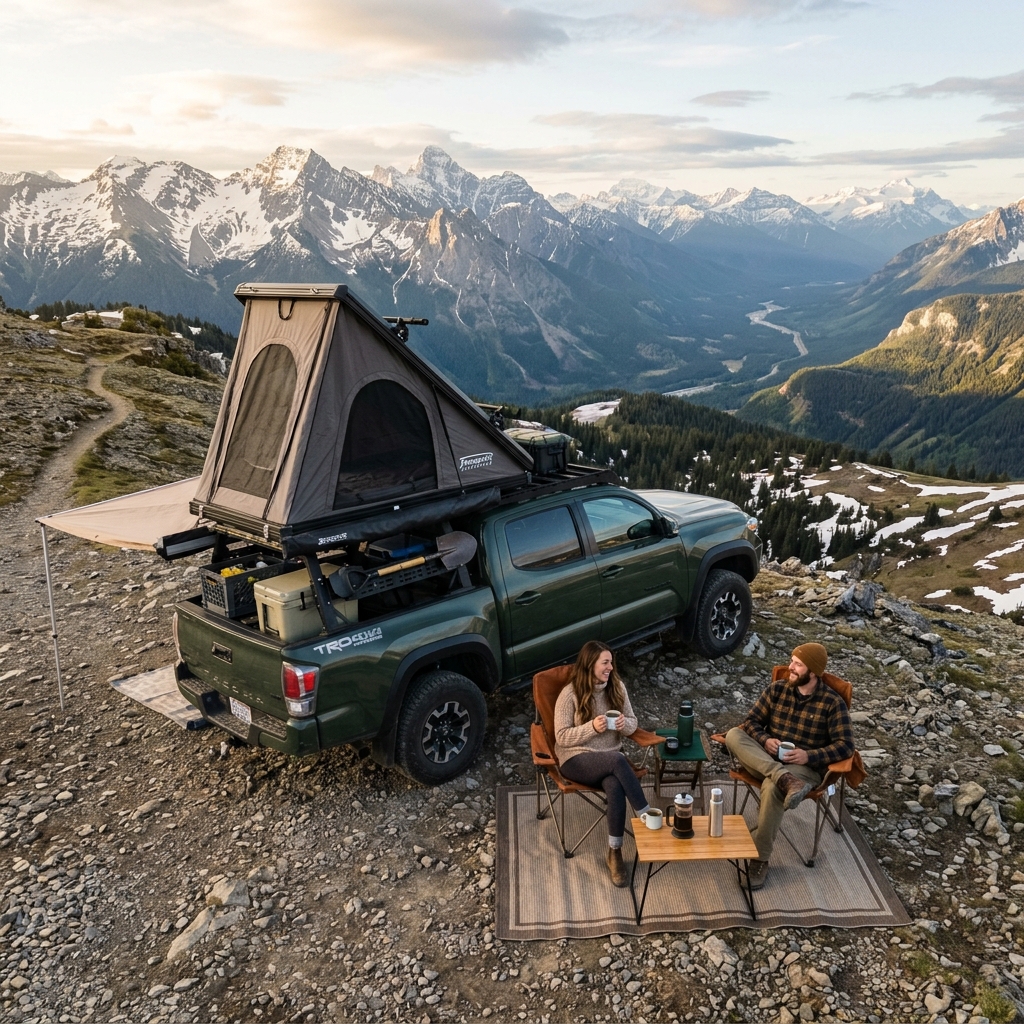
There's a strain of thought in outdoor culture that treats car camping as a lesser form of outdoor experience — a gateway you're supposed to graduate out of, something beginners do before they earn the credibility to carry everything on their back for five days.
This is wrong, and the people who believe it are missing some of the best camping there is.
What Car Camping Actually Is
Car camping means driving to a campsite and sleeping near your vehicle. You're in a designated spot, often with access to bathrooms, fire rings, and potable water. You're not carrying everything on your back.
What it isn't: easy in the dismissive sense, second-rate, inauthentic, or something to be ashamed of.
What it is: accessible, flexible, often beautiful, and the way most people will camp for most of their outdoor lives.
The Things Car Camping Allows
Car camping lets you bring real food — fresh meat, vegetables, whole fruit, a decent stove setup. You can cook meals you actually enjoy eating rather than optimizing for caloric density in 100 grams.
It lets you sleep comfortably. A full-size sleeping pad, a real pillow, enough layers to actually be warm — not the spartan sleep system a backpacker calculates to the ounce.
It lets you bring people who aren't ready for a multi-day pack yet — children, friends who are new to the outdoors, older family members. Car camping is how most people get introduced to being outside. It's how the outdoor community grows.
It lets you be at a specific place, reliably. If there's a lake you want to fish in the morning, a trail you want to walk at sunrise, or a view you want to watch the light change over — car camping gets you there and keeps you there, for as long as you want.
The Backpacking Credentialism Problem
The outdoor community has a version of a common social pathology: valuing difficulty for its own sake, and ranking experiences by how hard they were to achieve.
A backpacker who carries 40 lbs for 15 miles to sleep on a rock near a scenic lake is doing something genuinely impressive. But a family car camping at a lakeside site and watching their kids catch their first fish in the morning is having an experience that's no less real or meaningful, just different.
The experiences aren't in competition. The family doesn't need to eventually "graduate" to backpacking to have had a worthwhile time outdoors. The view doesn't become less beautiful when you drove to it.
The Most Important Thing
The best outdoor experience is the one you actually have. A perfectly executed ultralight backpacking trip that you never took is not better than a car camping weekend with your kids at a campground with flush toilets.
The outdoors is not a performance space. There's no audience and no points system. The value in it — the mental reset, the presence away from screens, the relationships deepened over a campfire, the sounds of wind in trees at night — all of that is available at a car campsite.
You don't have to earn it first.
The Honest Assessment
Yes, backpacking offers something car camping doesn't — genuine remoteness, the specific earned quality of a place you worked to reach, the simplicity of carrying everything you need on your back. These are real things. If you want them, pursue them.
But car camping offers something backpacking doesn't — ease of access, comfort, real food, the ability to involve more people, the option to stay for multiple nights without planning the water source for each campsite. These are also real things. Neither set negates the other.
The hierarchy between them is socially constructed, not actual.
Car camp without apology. Bring good food, a comfortable sleep system, and people you want to spend real time with. If you want to eventually try backpacking, try it — it's worth doing. But it's a different thing, not a superior one.
Find your next car camping site on AATW's Explore Map — over 45,000 locations and counting.