

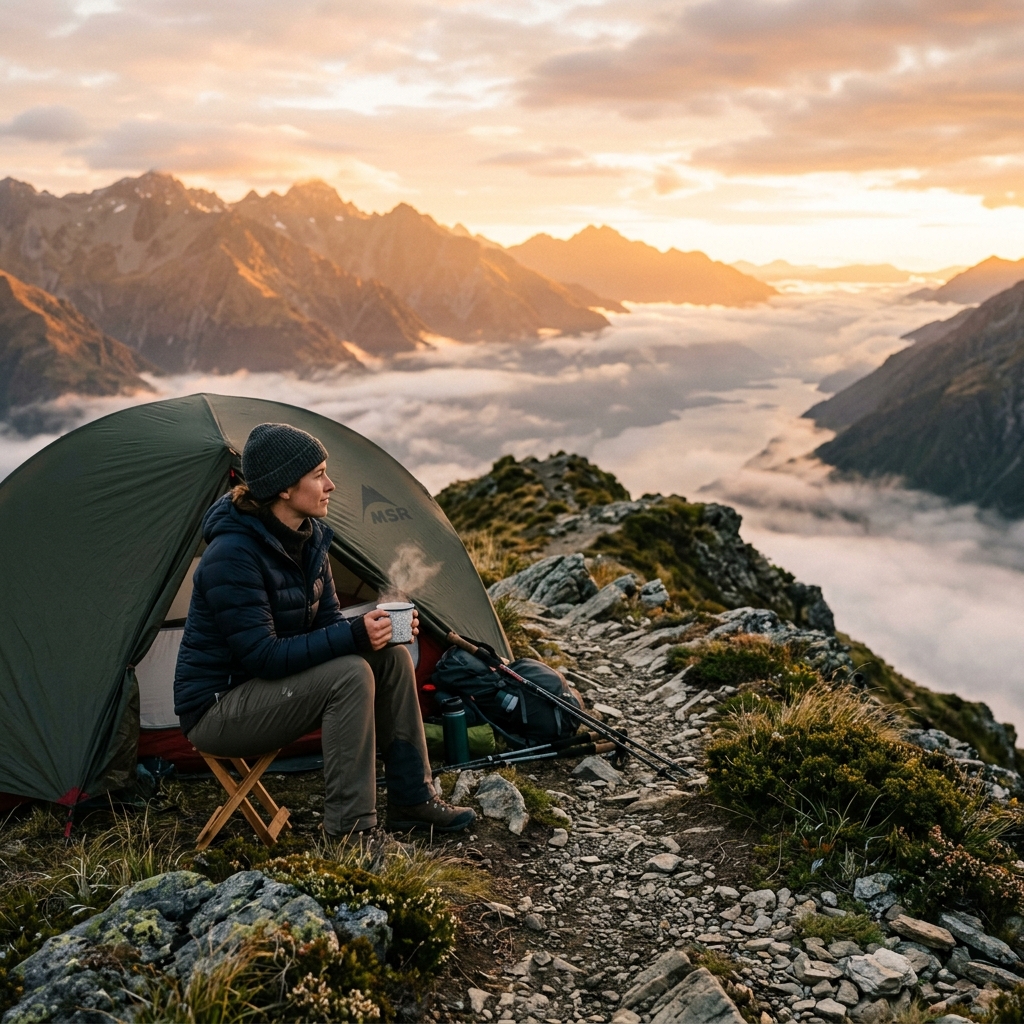
Going alone is different. There's no one to share the cooking, carry the heavy bag, or double-check the map. There's also no one to negotiate with about when to wake up, which trail to take, or how long to sit and watch the light change.
Solo camping is, for many people, the purest form of outdoor experience. It's also more demanding — on your planning, your self-reliance, and your mental resilience when things don't go as expected. This guide prepares you for both.
Is Solo Camping Right for You?
Solo camping isn't an advanced activity, but it requires a specific mindset.
You should be comfortable:
- Making all decisions alone, including route-finding and turnaround decisions
- Managing your own morale when things go sideways (weather, fatigue, equipment issues)
- Not being found immediately if something goes wrong
Solo camping is NOT recommended if:
- You've never camped before — do one or two group trips first to learn the basics
- You're planning a technically demanding route without prior experience
- You have a medical condition that could create an emergency
For most people who've camped a few times, solo camping at a developed campground is entirely reasonable as a first solo trip.
Start Simple: Your First Solo Trip
Choose a developed campground for your first solo outing. This is not a compromise — it's strategy. You have access to bathrooms, other campers nearby, and in most cases cell service. It lets you experience the mental aspect of solo camping without stacking unknowns on top of unknowns.
Stay close to your car on the first night. There's no shame in sleeping in your car if you feel unsafe or severely uncomfortable. Knowing you have that option reduces anxiety dramatically.
One night first. Build confidence with a single night out before committing to multi-night solo trips.
Safety: What Changes When You're Alone
The core safety changes when solo camping come down to one concept: there's no backup.
The Most Important Step: Share Your Itinerary
Before every solo trip, share:
- Your destination and campsite name/coordinates
- Your route if hiking
- Your expected return time
- What to do if you don't check in (who to call, what threshold triggers concern)
This single step is what makes solo camping genuinely safe. If something goes wrong, someone knows where to look and when. Search and rescue relies on this information.
Communication Equipment
Solo campers should carry a satellite communicator (Garmin inReach Mini, SPOT X, Zoleo) on any trip outside reliable cell service. These devices provide:
- Two-way messaging from anywhere on Earth
- SOS capability with GPS coordinates sent directly to rescue services
- Peace of mind for both you and the people who know you're out there
The annual subscription ($130–200/year depending on plan) is the most impactful safety investment a solo camper can make.
A fully charged phone and external battery pack is the minimum for developed campgrounds with cell coverage.
Medical Considerations
An injury serious enough to require help but not immediately life-threatening — a sprained ankle, a deep cut, a suspected broken bone — presents differently when you're alone. Practice prevention more rigorously than you would in a group:
- Use trekking poles aggressively on uneven terrain
- Move more slowly on technical ground
- Tell yourself: a twisted ankle that a group could laugh off could end a solo trip
- Know basic self-rescue: how to fashion a splint, how to self-arrest a minor bleeding wound, when to shelter in place vs. self-evacuate
Wildlife Solo
The same food storage rules apply. When hiking solo, make noise on the trail — talking to yourself, clapping, singing. Bears that hear you first almost always move away. The rare dangerous encounter happens when a bear is surprised at close range.
In grizzly country, bear spray is especially important for solo travelers. Carry it on your hip, not your pack.
The Mental Game: Managing Yourself Alone
This is the part of solo camping guides don't talk about enough.
The First Evening is the Hardest
Most solo campers report that the first evening alone — especially the first night — involves a period of heightened alertness and low-level anxiety. Every unfamiliar sound is processed as a potential threat. This is normal. Your brain is running a threat assessment protocol that evolved over hundreds of thousands of years. It doesn't have much experience distinguishing a branch falling from something dangerous.
This phase passes. Usually by 10pm on night one. By night two it's barely present.
What helps:
- Keep busy during the early evening — set up camp methodically, cook, clean up
- Don't reach immediately for your phone
- Sit with the discomfort for 20 minutes before deciding it's too much
- Write in a journal — it externalizes the mental chatter
Solitude vs. Loneliness
There's a meaningful difference between solitude (chosen, regenerative) and loneliness (unchosen, depleting). Most people who try solo camping find that what they feared would be lonely turns out to be regenerative.
The things that feel like problems in the first hour — no one to talk to, quietness, being in your own head — tend to become the specific things you savor by day two.
If you genuinely find solo camping lonely and depleting rather than restorative, that's useful self-knowledge. Not every person is well-suited to solitude. That's not a failing.
Decision Fatigue
Solo camping involves making every decision alone. Choice of campsite, departure time, what to cook, which trail variant to take. This is liberating and exhausting in equal measure.
Practical strategies:
- Pre-plan more decisions than you would in a group (campsite, meal plan, route options)
- Give yourself permission to change plans and not view it as failure
- Trust your judgment — you know what you need better than any group consensus
Gear Adjustments for Solo Camping
Tent: A solo tent (1-person or bivy) is significantly lighter and easier to set up. For car camping, size doesn't matter.
Food: Solo camp cooking means smaller quantities, less variety, and more tolerance for repetition. Freeze-dried meals are especially practical solo because they require nothing but boiling water. Plan meals that don't leave leftovers.
Fire: Building a campfire for one can feel like a lot of effort for ambiance alone. Some solo campers love it. Others skip the fire entirely and read by headlamp. Make the call based on your actual preference, not what you think camping is supposed to look like.
Night sounds: Know the common sounds of the region before you go. In bear country: learn what bear activity sounds like at camp (usually a lot of sniffing and crashing through brush). In big cat country: a scream in the night is almost always a red fox.
Building Your First Solo Night Out
Choose your destination. A state park within 2 hours of home, a developed site you've visited before, or a campground with reviews on AATW's Explore Map that mentions it's good for solo travelers.
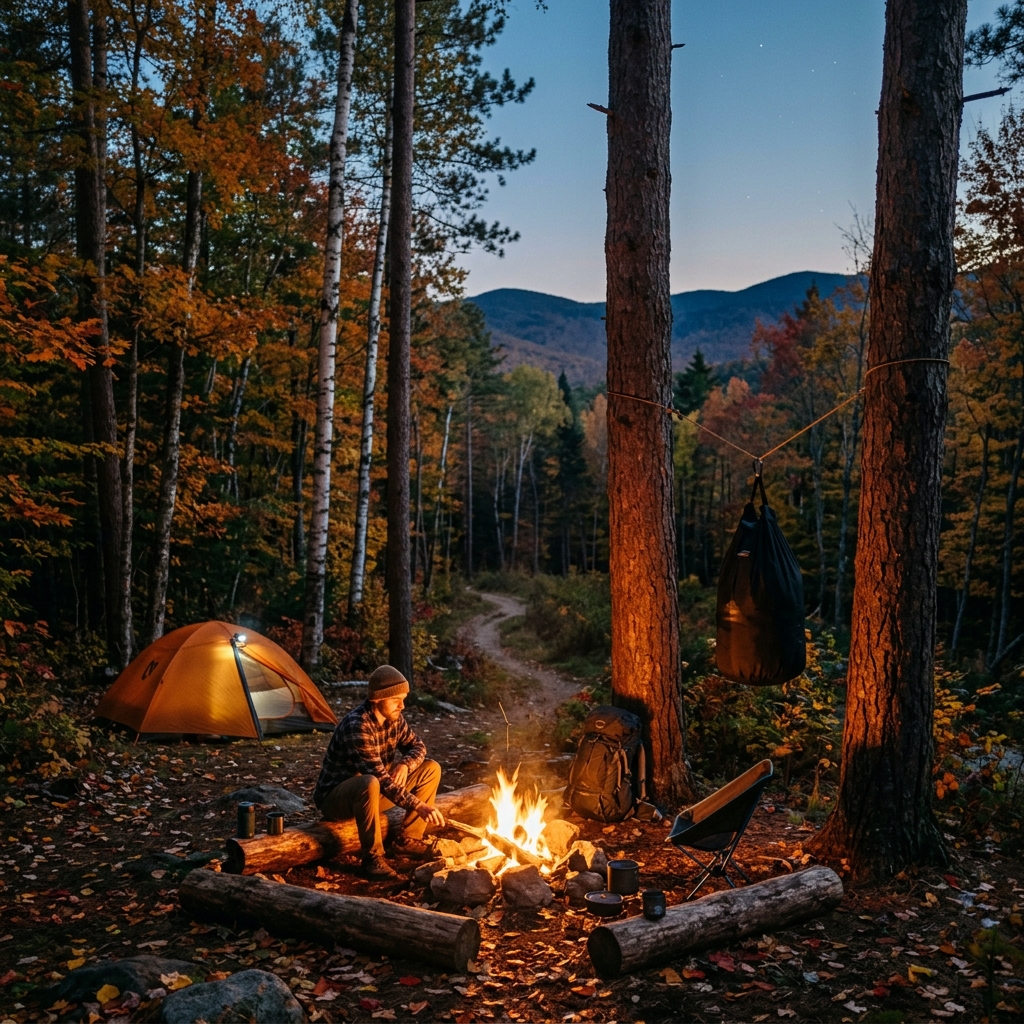 Solo camp at dusk — food hung, tent set, campfire going. The quiet that follows is the whole point.
Pack for self-sufficiency. Everything you need to handle problems is in your gear. No one else is carrying the first aid kit.
Tell someone your plan. This is non-negotiable.
Give yourself permission to feel uncertain. The discomfort of the first solo night is almost universally followed by something that feels a lot like pride.
Common Solo Camping Mistakes
Overplanning the schedule. One of the best parts of going alone is having no obligations. Leave days loose.
Bringing too much entertainment. Most people who go solo and spend the whole time on their phone or listening to podcasts report feeling like they didn't really go alone. Leaving some mental space for the experience itself is what makes solo camping different.
Skipping the safety protocols. Solo campers who skip sharing their itinerary, who don't carry communication equipment, or who take bigger risks than they would in a group are the ones who turn solo camping statistics from reassuring to cautionary.
Going too remote too soon. The difference between a solo trip at a developed campground and a solo backpacking route into a remote wilderness area is significant. Graduate through difficulty levels.
Solo camping is a skill that compounds. The second trip is easier than the first. The third trip feels natural. After a handful of solo nights, you'll understand why some campers prefer it by a wide margin.
There's a version of yourself that exists only when it's just you and the woods and no one to perform for. Finding that version is worth some discomfort on the first night.