

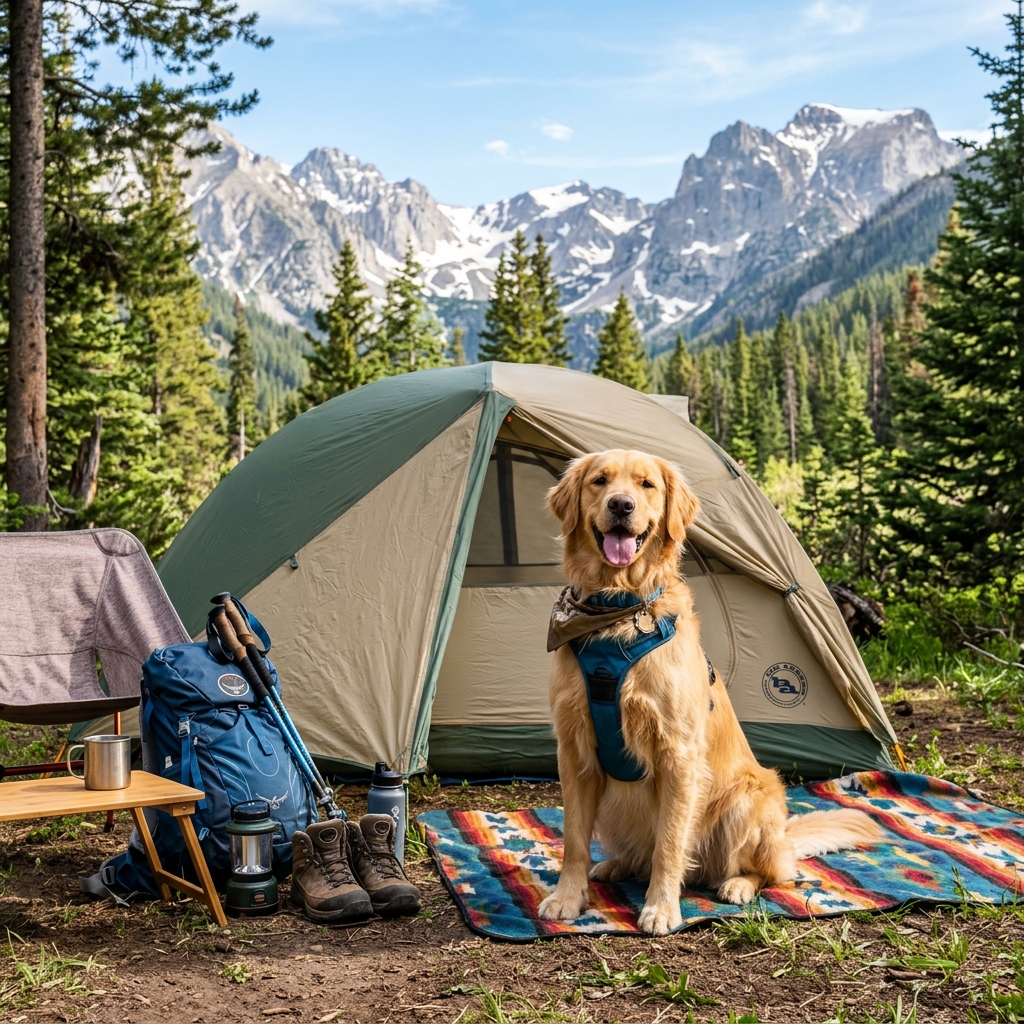
Dogs make excellent camping companions. They're enthusiastic about the forest, indifferent to rough conditions, easy to cook for, and genuinely happy at camp. They also require meaningful preparation, create specific logistics challenges, and are your responsibility in every interaction with wildlife, other campers, and the land itself.
This guide covers everything from pre-trip health checks to handling the specific emergencies that happen more often at camp than at home.
Before the Trip: Preparation That Matters
Verify Your Dog Can Handle It
Dogs get hypothermic, dehydrated, and fatigued just like people. Consider:
Age and health: Very young puppies (under 12 weeks) and elderly dogs with joint or cardiac issues need veterinary consultation before camping trips. Most adult healthy dogs handle camping very well.
Trail fitness: A dog that lives mostly indoors and walks 1 mile per day will struggle on a 10-mile day hike. Build trail time gradually before a demanding trip.
Temperament: An anxious or reactive dog that's already difficult on leash will be significantly more challenging in a campground environment with new animals, smells, and strangers. Be honest with yourself about whether the experience is net positive for your dog.
Health and Vaccinations
Before any camping trip with your dog:
- Rabies vaccination: Current and documented. Required for most camping areas.
- Bordetella (kennel cough): Recommended if camping in areas with other dogs.
- Leptospirosis: Recommended for dogs that swim in or drink from natural water sources.
- Flea, tick, and heartworm prevention: This is non-negotiable for camping. Use veterinarian-recommended monthly prevention appropriate to the region you're visiting. Lyme disease risk varies significantly by region — check the risk level for your destination.
- Carry vaccination records on any multi-day trip.
Know the Rules Before You Go
Dog policies vary dramatically by land type:
| Land Type | Typical Dog Policy |
|---|---|
| Most State Parks | On leash at all times, specific trail restrictions |
| National Forests | On leash recommended, specific rules vary by Forest |
| National Parks | Most restrict dogs to developed areas only; prohibited on most trails |
| Wilderness Areas | Often prohibited or heavily restricted |
| BLM Land | Generally dog-friendly with minimal restrictions |
Always check the campground's specific policy before booking. "Dog-friendly" on a campground listing may still mean "on leash at all times" and "not permitted on certain trails." AATW's location pages include pet policy information where available.
Gear: What Your Dog Actually Needs
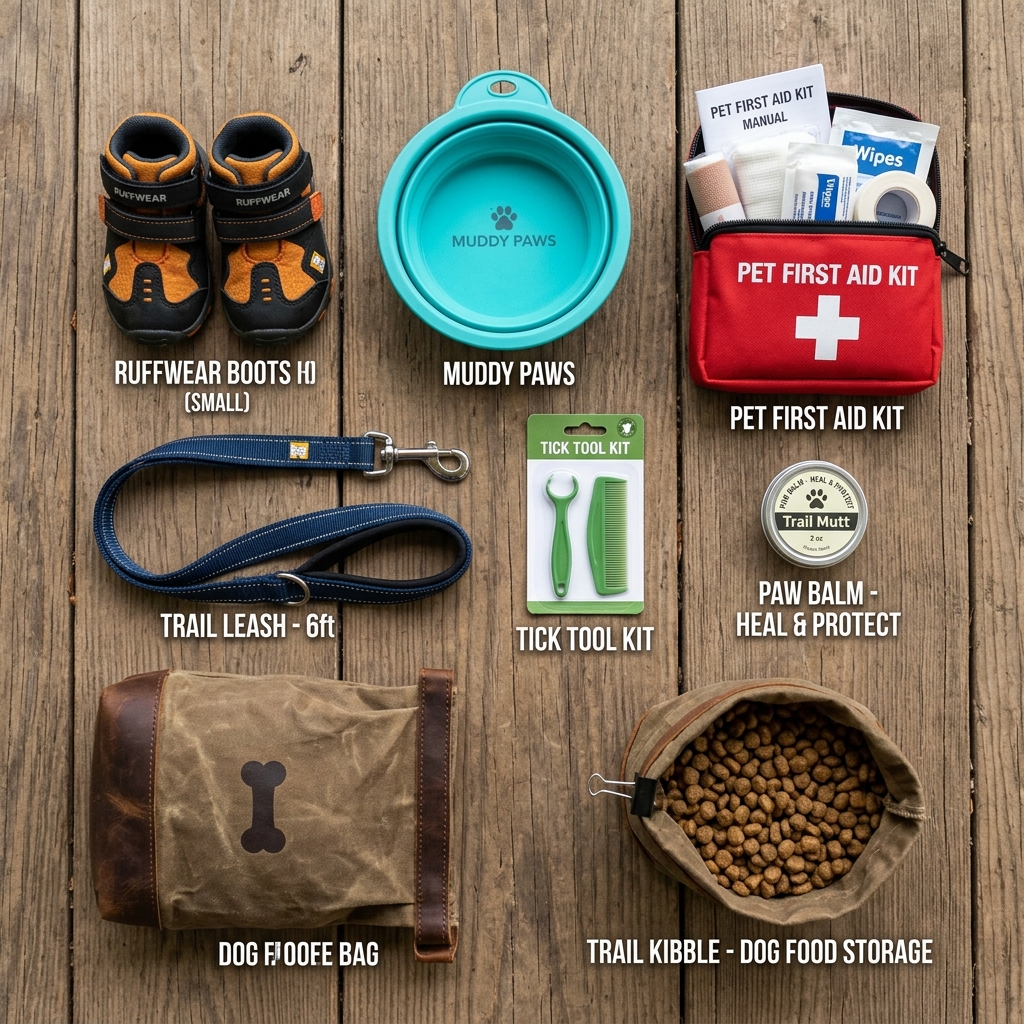 A complete dog camping kit doesn't need to be elaborate. These core items cover most situations.
Non-negotiable:
- 6-foot leash (required in most campgrounds — retractable leashes are a hazard around other campers and wildlife)
- Collar with ID tags including your cell number
- Current vaccination records
- Food and water for the duration plus one extra day
- Collapsible water bowl
- Waste bags (more than you think you'll need)
Strongly recommended:
- Dog first aid kit (see below)
- Dog pack for longer hikes — healthy dogs can carry 10–25% of their body weight
- Bear canister or car storage for dog food — it smells as much to a bear as human food does
- Spare leash
- Dog towel (quick-dry microfiber)
Situational:
- Dog boots: For rocky terrain, hot pavement, or significant snow. Requires acclimatization — don't put them on for the first time at the trailhead.
- Dog jacket or vest: For short-haired breeds in cold weather
- Visibility vest or light: For dusk or dawn hiking
Dog First Aid at Camp
Injuries that are minor annoyances at home can be significant problems at camp. Build a dog-specific first aid kit:
- Wound wash (saline solution or veterinary wound spray)
- Non-stick gauze pads and self-adhering bandage wrap (VetWrap)
- Tweezers (for ticks, splinters, thorns)
- Tick removal tool
- Styptic powder (for nail bleeds)
- Diphenhydramine (Benadryl) — confirm dosing with your vet in advance for allergic reactions
- Paw balm for cracked pads
- Any prescription medications your dog requires
Paw care: Check paws after every hike. Examine between the pads for cuts, embedded debris, or cracking. Hot pavement and sharp rock are the main culprits. If a pad is cut and bleeding significantly, clean thoroughly, apply styptic powder, wrap with VetWrap, and limit further hiking.
Ticks: Check your dog thoroughly after every hike, especially around ears, collar area, between toes, under the tail, and in armpits. Remove with a tick removal tool — grasp as close to the skin as possible and pull straight out without twisting. Save the tick in a zip-lock for potential testing if your dog develops symptoms.
Water and Hydration
Dogs dehydrate faster than people during activity and don't always communicate thirst clearly. Offer water every 15–20 minutes during active hiking, not just when your dog asks for it.
Natural water sources carry the same risks for dogs as for humans: Giardia and other parasites can infect dogs through unfiltered water. This is especially true for dogs that drink eagerly from streams and lakes. Using a filter or bringing sufficient water from home is the safest approach.
Signs of dehydration in dogs: dry gums, sunken eyes, skin that doesn't snap back quickly when gently pinched on the back of the neck.
Campsite Etiquette and Wildlife
Leash laws exist for good reasons. "My dog is friendly" is not a universal experience — other campers may be afraid of dogs, have reactive dogs of their own, or have food storage requirements that your off-leash dog complicates. Keep your dog on leash unless you're in a designated off-leash area.
Wildlife encounters: Dogs that run off-leash can trigger serious wildlife conflicts. A dog that chases a bear — even playfully — can draw the bear back to camp. Dogs that disturb elk, deer, or other wildlife during sensitive seasons cause real ecological harm. In snake habitat, an off-leash dog is far more likely to get bitten than a leashed one.
If your dog encounters a bear: Keep the dog on leash and close to you. If the dog is on a leash and barking, that actually sometimes works to make bears leave — but an off-leash dog can run at a bear and then run back to you with the bear following. This is how people get between a dog and a threatened bear — one of the most dangerous configurations possible.
Bark management: A dog that barks at every sound all night creates problems for every camper on your loop. Dogs that are anxious in new environments often bark more. Consider: a white noise machine near your tent, familiar bedding or a crate if your dog is crate-trained, and a calm, quiet arrival at camp to set the tone.
Hiking with Your Dog: Realistic Distance Guidelines
Trail mileage that's appropriate for your dog depends heavily on:
- Breed and physical fitness level
- Temperature (heat is the greatest limiting factor)
- Terrain (sandy desert vs. cushy forest trail)
- Water availability
General guidelines for a fit, healthy adult dog:
| Fitness Level | Comfortable Daily Mileage |
|---|---|
| Mostly indoor dog | 4–6 miles |
| Regular walker (2+ miles/day) | 8–12 miles |
| Trail-conditioned dog | 12–18 miles |
Heat is the biggest risk. Dogs cool primarily through panting, which is less efficient than sweating. In temperatures above 85°F, limit hiking to early morning and evening. On hot days, frequent water breaks and shade rest are essential. Signs of heat stroke in dogs: excessive panting, difficulty walking, vomiting, drooling heavily, collapse. This is a veterinary emergency — cool the dog with water immediately and seek help.
Sleeping Arrangements at Camp
Most dogs adapt quickly to sleeping in a tent. A familiar dog bed or sleeping pad gives them a defined spot and insulation from the ground (dogs sleep cold too, especially short-haired breeds).
Never leave your dog unattended tied outside a tent overnight. This is a wildlife hazard — to the dog and potentially to wildlife that approaches. Dogs inside the tent or secured in a vehicle are the only appropriate overnight options.
Bear risk with dogs at camp: Dog food stored outside is a significant bear attractant. Store all dog food, bowls, treats, and waste bags in your car, bear box, or bear canister — the same as human food.
When to Leave the Dog at Home
Some situations genuinely warrant leaving the dog behind:
- Destinations where dogs are primarily prohibited (most National Park trails)
- Very high heat forecast
- Technically demanding scrambling or rock routes where a leashed dog is a safety hazard
- Multi-day backpacking trips your dog isn't conditioned for
- When your dog is recovering from injury or illness
Knowing when your dog will genuinely enjoy the trip versus when the trip is more stress than pleasure — for the dog — is part of responsible pet ownership.
Dogs that grow up camping become dogs that are genuinely happier, better socialized, and more resilient. The first trip always has friction. By the third or fourth trip, the dog is loading into the car before the camping gear.