

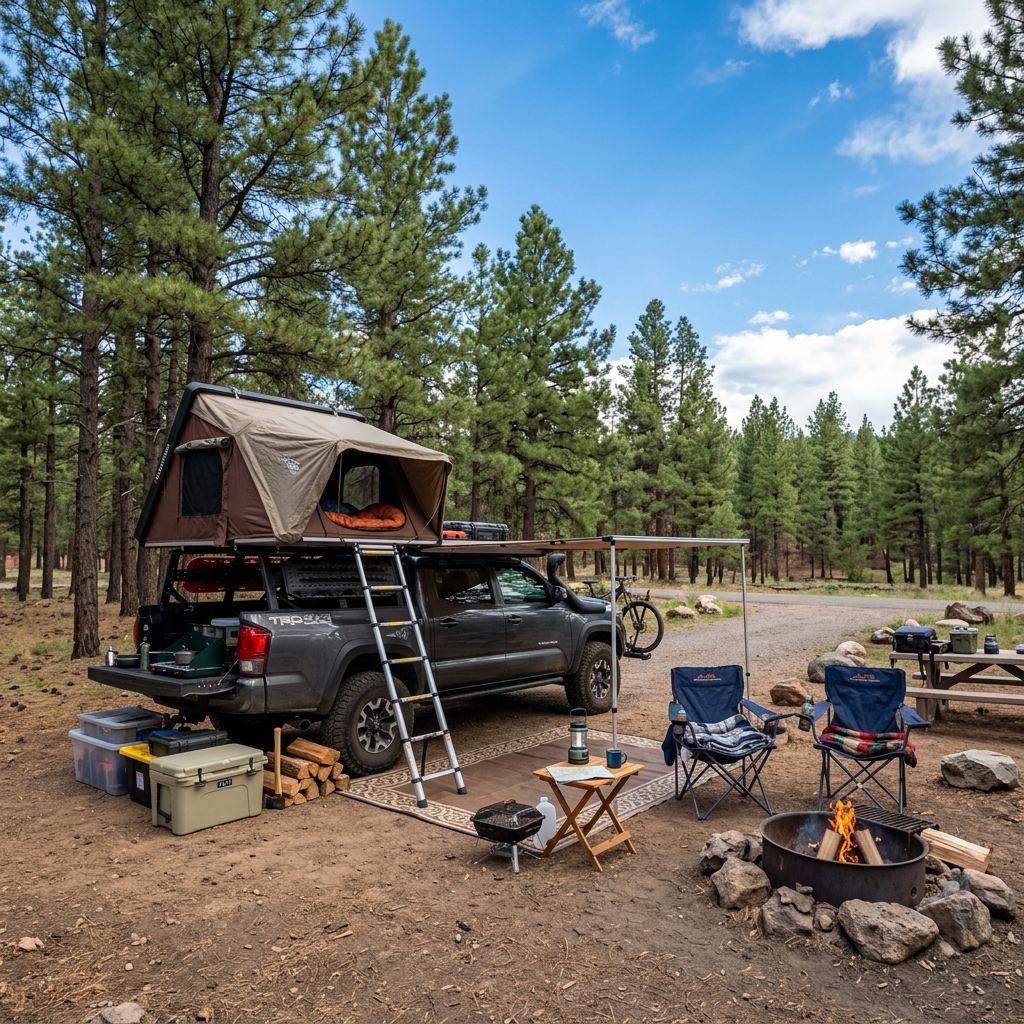
Car camping — driving to a designated campsite and setting up near your vehicle — is how most people experience the outdoors for the first time. It's also how most experienced campers spend the majority of their nights out.
The appeal is obvious: you don't have to carry everything on your back, you have access to your car's storage and electronics, and you're usually close to facilities. The challenge is learning to organize your gear and create a functional, comfortable camp from the trunk of a car.
This guide covers everything specific to car camping: how to organize a car for camping, what extra gear you can bring that backpackers can't, how to set up a camp that functions well, and the logistics that make car camping trips smooth.
The Car Camping Advantage: What Changes
When weight isn't a constraint, you can bring:
- A real cooler with actual food — fresh meat, dairy, fruit, vegetables for multiple days with sufficient ice
- Comfortable sleeping — a full-sized sleeping pad, a comfortable pillow, more bedding than minimal
- Camp furniture — chairs, a table, a camp kitchen with multiple burners
- Entertainment — books, games, instruments, a portable speaker
- Better lighting — a camp lantern, string lights for ambiance
- Redundant gear — extra fuel, extra clothing, extra food
This is not a license to bring everything. An overpacked car creates logistical chaos at camp. Bring what serves the trip — not what could theoretically be useful.
Packing the Car: Organization as Strategy
The best car camping setups treat the car as a mobile storage system with predictable organization. Everything in a consistent location means finding things in the dark is possible.
The system that works:
Bin 1 — Kitchen: Stove, fuel, cookware, utensils, cutting board, biodegradable soap, sponge, paper towels. Everything needed to cook goes in one bin. At camp, this bin lives on the picnic table.
Bin 2 — Food: All non-perishable food. Use a soft-sided cooler bag for perishables. Keep together, transfer to cooler or car between meals.
Bin 3 — Bedding: Sleeping bags, pillows, sleeping pads (compressed or rolled). These go in last (bottom of the pile) and come out first at camp.
Bag — Clothing: One bag per person or per family, labeled. Clothing bags get dragged to the tent rather than bringing the whole bag.
First aid + tools bag: First aid kit, headlamps, batteries, knife, duct tape, firestarter, insect repellent, sunscreen. Accessible easily, not buried under the food.
Bear/food security: All food, coolers, and scented items go back in the locked car each night. You want the cooler and food bin easily reachable without unpacking the whole car.
Setting Up Camp Like a Functional Kitchen
The picnic table is your kitchen. Use the full length: cooking side (stove, fuel, cookware), food prep side (cutting board, ingredients), and dedicated clean-up area or drying rack.
Camp kitchen organization:
- Establish one hook or clip location for hand sanitizer — reaching it consistently keeps it from disappearing
- One marked trash bag at all times — easier when the bag has a known home
- Dishwater station: a collapsible basin for wash, a second for rinse
- Spice kit: small magnetic spice tins or labeled zip-locks for the spices you actually use
Fire ring management: The fire ring is for fires, not trash. Keep the ring clear of food waste and disposable packaging. A dedicated bag or stick for toasting marshmallows saves forks.
Sleeping Comfort: The Car Camping Opportunity
With weight removed as a constraint, car camping allows for genuinely comfortable sleep. Don't waste the opportunity with minimal gear.
Sleeping pad: An inflatable double-height sleeping pad (Exped MegaMat, REI Camp Dreamer) is far more comfortable than any tent sleeping option available to backpackers. At a car camping site, bring the most comfortable pad that fits your tent.
Sleeping bag + blanket: Car campers often use a sleeping bag liner and a blanket system rather than a sleeping bag alone — more versatile for temperature variation. A light synthetic bag for potential cold nights and a blanket on top for warmth adjustment.
Pillow: Bring a real pillow. The compressible camp pillow is a backpacker's compromise. At a car campsite, a regular pillow is an easy upgrade.
Layer management: Set out the next day's clothes at the sleeping area before bed. Less fumbling in the dark.
Electricity and Charging at Car Camping Sites
Many developed campgrounds now offer electrical hookups at sites — useful for car campers with CPAP machines, medical equipment, or who want to avoid battery drain concerns.
For sites without hookups:
Car-based: A 12V outlet (cigarette lighter) in most vehicles can charge phones and small devices while the car runs. Don't leave the car running more than needed — idle charging is inefficient.
Portable battery banks: A large battery bank (Anker PowerCore, Goal Zero Sherpa) charged at home handles phones and headlamps for a weekend with ease.
Solar panels: Portable panels (Goal Zero Nomad 20, BioLite SolarPanel 10+) work well at car camping sites where you can drape them over a tent or lean against the car. Useful for multi-day trips.
Generator: A small inverter generator (Honda EU2200i) provides conventional AC power. Note: generators are prohibited at some campgrounds and are antisocial in quiet campgrounds. Check the rules and be considerate of neighbors.
Cooler Management: Making Your Ice Last
A well-managed cooler is the difference between varied, fresh food for 4 days and disappointing soft food by night 2.
Pre-chill everything. A warm cooler melts ice immediately. Put the cooler in the car overnight before your trip with ice packs, or add ice a day in advance to pre-cool.
Block ice lasts longer than cubed. Frozen water jugs (refreezable water bottles or milk jugs) are the most efficient ice source — they melt into cold water rather than pooling, and the ice chunk stays solid longer.
Minimize opening. Every time you open the cooler, warm air replaces cold. Know what you're getting before you open it.
Separate coolers for drinks and food. A drinks cooler opened constantly (warm drinks are miserable) destroys ice efficiency for the food cooler. Keep them separate.
Pack in meal order. Dinner first materials at the bottom, breakfast materials on top.
Keep the cooler in shade. Car trunk in direct sun gets very hot. Store the cooler under a picnic table, in shade, or under a tarp.
Car Camping at Night: What to Do with the Car
Every night:
- All food, coolers, and scented items locked in the car
- Cooler cords through a car or cable lock is overkill at most sites; locked in the car is sufficient at all but the most bear-dense campgrounds
- Valuables out of visible range in the car
Never leave food in the tent. This applies equally to car camping as backpacking. The tent provides zero bear resistance.
Making Camp Feel Like Camp
The difference between a fine camping trip and a great one is often ambiance — and car camping allows for it.
Lighting: A camp lantern at the table, a string of LED lights around the campsite, and individual headlamps for everyone. Light makes evening camp social and functional.
Camp chairs: Chairs around the fire are the center of camp social life. Bring good ones if car camping allows — Helinox and similar ultralight designs are packable even if heavy, and they're worth it for a weekend.
Morning ritual: Camp coffee made intentionally is one of the great pleasures available at a campsite. Pour-over coffee with freshly ground beans is feasible when you have a car.
The campfire: If fires are permitted and conditions safe, a campfire is often the organizing principle of a car camping evening. Learning to build and maintain a good fire takes a trip or two — aim for hot coals, not roaring flames.
Common Car Camping Mistakes
Overpacking. Taking everything "just in case" creates a car you have to unpack entirely to reach anything. Edit before leaving.
Not pre-organizing. Putting gear in the car randomly means searching through everything at camp. 20 minutes of organization at home saves hours of frustration at the campsite.
Assuming the site has everything. Car camping sites at developed campgrounds typically have a fire ring, a picnic table, and a parking space. Amenities beyond that vary widely. Check what your specific site offers before assuming a water hookup, a grill, or an electric outlet will be present.
Arriving after dark. Setting up camp in the dark is stressful and error-prone. Arrive with 2–3 hours of light remaining.
Not checking fire restrictions. Fire restrictions at developed campgrounds are just as commonly enforced as in the backcountry. A campground visit in summer in the western US frequently coincides with fire restrictions. Check in advance.
Car camping is where most people fall in love with the outdoors. The lower barrier to entry is the point — you don't need to earn the experience with difficulty. You just need to show up, set up, and let the environment do its work.
Find your next car camping site on AATW's Explore Map and plan the trip with friends in the Trip Planner.