

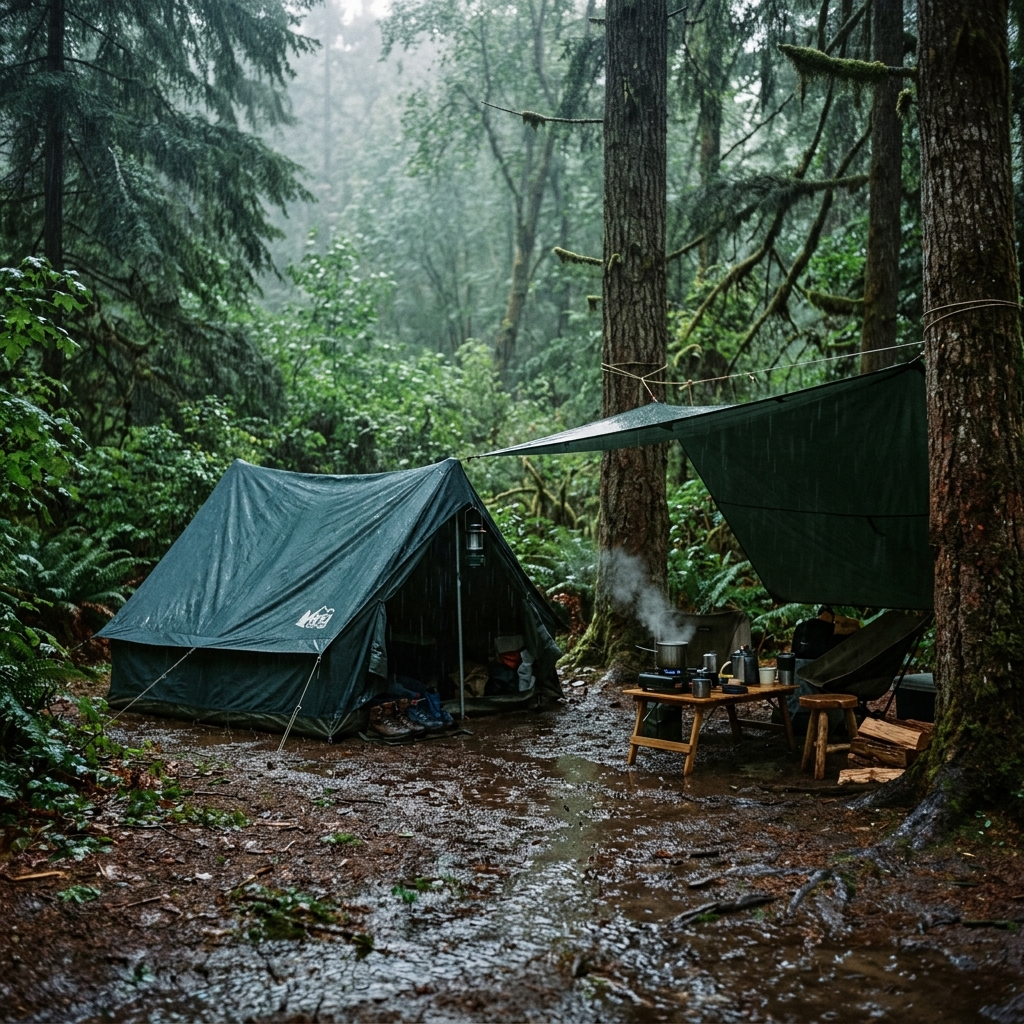
Rain is the condition most first-time campers fear and most experienced campers accept as simply part of the package. The difference between a miserable rain experience and a cozy one is almost entirely preparation — there's no gear that keeps you dry on its own without also knowing how to use it.
This guide covers tent selection and setup for rain, clothing systems, camp kitchen logistics in wet conditions, and the mental approach that makes rain something you tolerate and eventually appreciate.
Your Tent: What Actually Keeps You Dry
Rain fly coverage is the most important factor in a tent's rain performance. A full-coverage fly that reaches close to the ground on all sides keeps driven rain from reaching the tent body. A partial fly (covering only the roof) works in light drizzle and fails in sustained wind-driven rain.
When setting up in rain or potential rain conditions:
- Stake the rain fly out fully — a fly that sags against the tent body creates condensation pathways directly onto the inner tent
- Tension the fly at the guylines — the fly should be taut and have an air gap from the tent body all around
- Stake out the vestibule to create dry covered space for muddy boots and wet gear
Seam sealing: Even tents sold as "fully seam sealed" may develop leaks at seam tape over time. Apply a tube of seam sealer (McNett Seam Grip, Gear Aid) annually to any seam that shows moisture penetration.
DWR (Durable Water Repellent) treatment: The rain fly is coated with DWR that causes water to bead and roll off. This coating degrades with UV exposure and washing. When water no longer beads — it "wets out" and soaks into the fabric — apply a DWR spray (Nikwax Tent & Gear Solar Proof, Gear Aid ReviveX). Spray on, wipe off, let dry. This restores rain performance dramatically.
The Tarp: The Underrated Piece of Rain Gear
A tarp strung over your kitchen area is more useful in rain than almost any other piece of gear. It creates:
- A dry cooking and eating area
- Psychological shelter — having a covered social space fundamentally changes the rainy camp experience
- Protection for gear you don't want to bring inside the tent
Tarp setup basics: A silnylon or polyester tarp (8x10 or 10x12 for groups) with tie-out points and 50–75 feet of paracord handles most situations. Pitch with a central high point and angled sides — a flat tarp pools water and eventually dumps a load in your kitchen. An A-frame or lean-to shape sheds rain effectively.
At developed campgrounds, site trees often have obvious tarp-hanging options. Bring extra paracord (100 feet total) and a handful of S-hooks or carabiners for flexibility.
Wet Weather Clothing System
Never wear cotton in rain. We've said this elsewhere and it bears repeating: cotton soaks through, stays wet, and becomes a hypothermia risk in cold rain. At 55°F with wet cotton and wind, heat loss is dangerous. This is how "cold-weather accidents" happen in mild temperatures.
The rain-specific clothing system:
Base layer: Synthetic or merino wool. Merino performs notably well in wet conditions — it retains some warmth even when saturated and doesn't develop the acrid smell of synthetic when wet for extended periods.
Mid layer: A synthetic puffy jacket or fleece. Down loses its insulating ability when wet. In consistently wet conditions, synthetic insulation is the better choice — it retains significant warmth even when damp.
Outer layer: A genuine hardshell jacket and pants — not a "water resistant" windbreaker, but a waterproof, breathable shell. Gore-Tex, eVent, or equivalent. In sustained hard rain, this is the only layer that keeps moisture out entirely.
Wet management at camp:
- Designate a "wet layer" area — inside the vestibule, not inside the sleeping area
- Hang wet clothing on a line under the tarp rather than inside the tent
- Keep a dry set of sleeping clothes completely separate from your hiking clothes; sleep dry regardless of how wet the day was
Setting Up Camp in Rain: The Sequence
Arriving at camp in active rain requires a different setup sequence than fair weather:
- Get the tent body up first — lay the footprint, assemble poles, get the tent body off the ground
- Put the rain fly on immediately — before staking anything out
- Throw gear into the tent — get it off the wet ground before organizing
- Stake out and tension the fly — with the tent secure, tension the fly guylines properly
- String the kitchen tarp — before cooking is attempted
- Change into dry layers — wet clothing degrades camp performance for the rest of the evening
Tent floor management in rain: Keep a small camp towel or rag at the tent door. Before entering, wipe or shake excess water from rain gear. Remove wet boots — they stay in the vestibule. This one habit keeps the sleeping area dry even in sustained rain.
Cooking in the Rain
Use a camp stove, not a fire during active rain. Building a fire in rain is possible but almost always not worth the effort. A canister stove under your tarp is reliable and safe.
Canister stove wick note: Moisture on the canister or burner head can prevent ignition. Keep the stove head dry inside a bag when not in use. Always carry a backup lighter.
Never cook inside the tent. This is a carbon monoxide risk even with tent doors open. Cooking under the vestibule with adequate ventilation is sometimes done but is still risky. The tarp kitchen is the right answer.
Rain makes prep harder. Prep more at home — pre-chopped vegetables, pre-mixed seasoning packets, pre-measured rice. At camp in rain you want to open a bag, add boiling water, and have dinner. The elaborate multi-step camp meal is a fair-weather activity.
Moisture and Condensation Inside the Tent
Even with a proper rain fly, tents accumulate condensation. You and any companions breathe out significant moisture overnight — this condenses on the cold inner tent walls.
Managing condensation:
- Open vents and zippers slightly on the rain fly to allow airflow — even in rain, some ventilation reduces condensation significantly
- Don't bring wet gear inside the sleeping area — leave wet layers in the vestibule
- In the morning, wipe down tent walls with a small camp towel before packing — this significantly speeds drying when the sun returns
Condensation vs. rain leak: Condensation appears broadly on all inner surfaces and tends to be light and uniform. A leak appears as a steady drip from a specific point where water is penetrating. If you're seeing drips, trace them to the source: seams, zipper tape, guyline entry points.
Drying Gear After Rain
At camp: String a clothesline under the tarp when rain breaks. Wring out wet clothing, hang to dry. Even 30 minutes of airflow helps significantly.
On the trail: Attach wet clothing to the outside of a pack in sun and wind. Mid-day sun dries effectively at elevation.
When you get home: Dry everything completely before storage. A mold problem in a tent stored wet is serious — it degrades fabric and creates a permanent smell. Hang the tent fly and body separately, air out sleeping bags, dry every piece of clothing.
The Rain Mindset
Rain on a camping trip is not a failure state. It's weather, and weather is the primary sensory experience of being outside. The sound of rain on a tent fly, the smell of wet forest, the relief of dry clothes after a soaked hike — these are among the more visceral outdoor memories most people carry.
The campers who have the worst rain experiences are the ones who spend the trip wishing it weren't raining. The campers who have good rain experiences are the ones who dressed appropriately, set the tarp first, and recognized that the discomfort is temporary and the forest smells amazing when wet.
Rain camping is worth doing at least once before you decide it's not for you.