

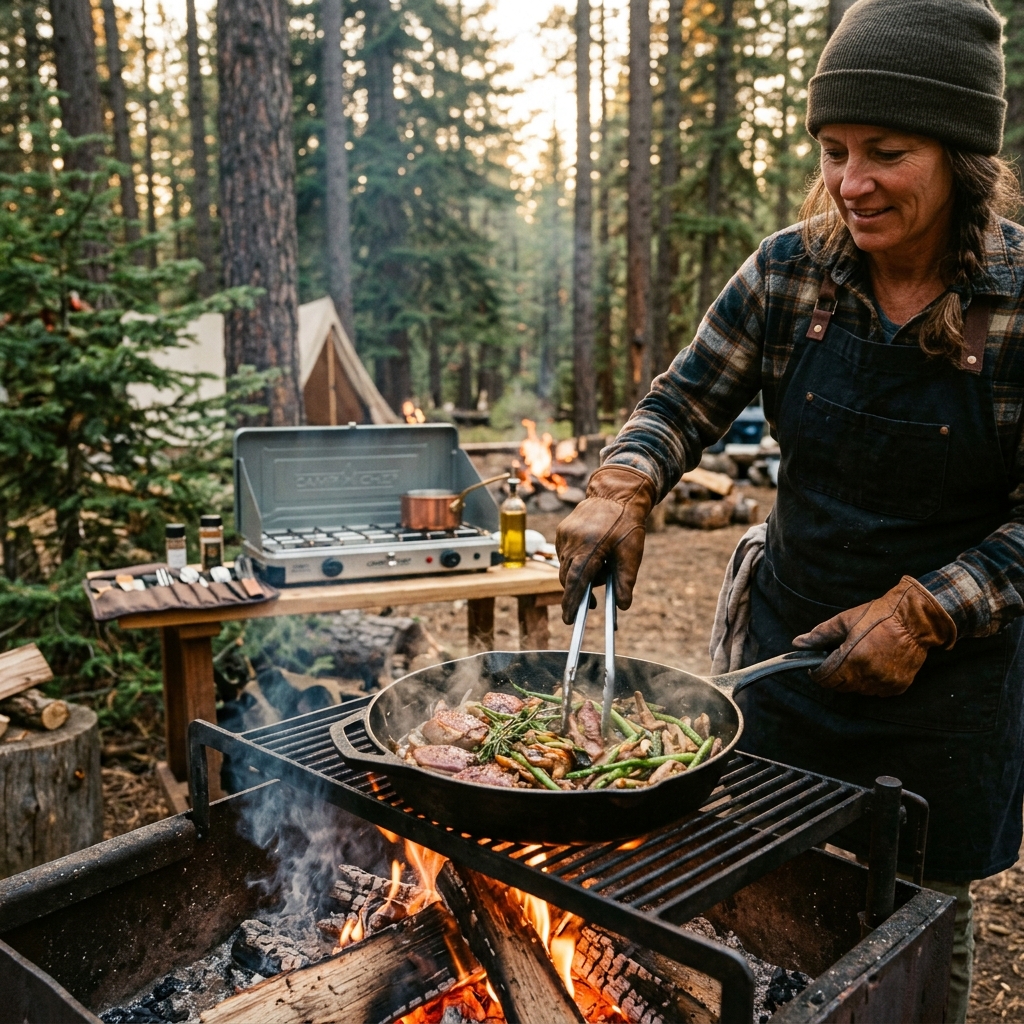
Camp cooking operates under constraints that home cooking doesn't: limited heat sources, no refrigeration, minimal cleanup options, and a kitchen that's occasionally raining. Within those constraints, some of the most satisfying meals you'll ever eat happen at a campsite.
This guide covers the full spectrum — from the simplest stove setups to campfire cooking that's actually worth the effort.
The Two Core Cooking Methods
Camp Stove Cooking
A canister stove (MSR PocketRocket, Jetboil, BRS-3000T) is the workhorse of camp cooking. Clean, controllable, fast, and reliable in most conditions.
What stoves do well:
- Boiling water (instant oatmeal, coffee, freeze-dried meals, ramen, pasta)
- One-pot sautéing and simmering
- Anything that requires precise heat control
What stoves struggle with:
- Large volume cooking (more than 2–3 portions)
- Anything requiring sustained high heat for extended periods
- Baking (specialized camp ovens exist but aren't beginner-friendly)
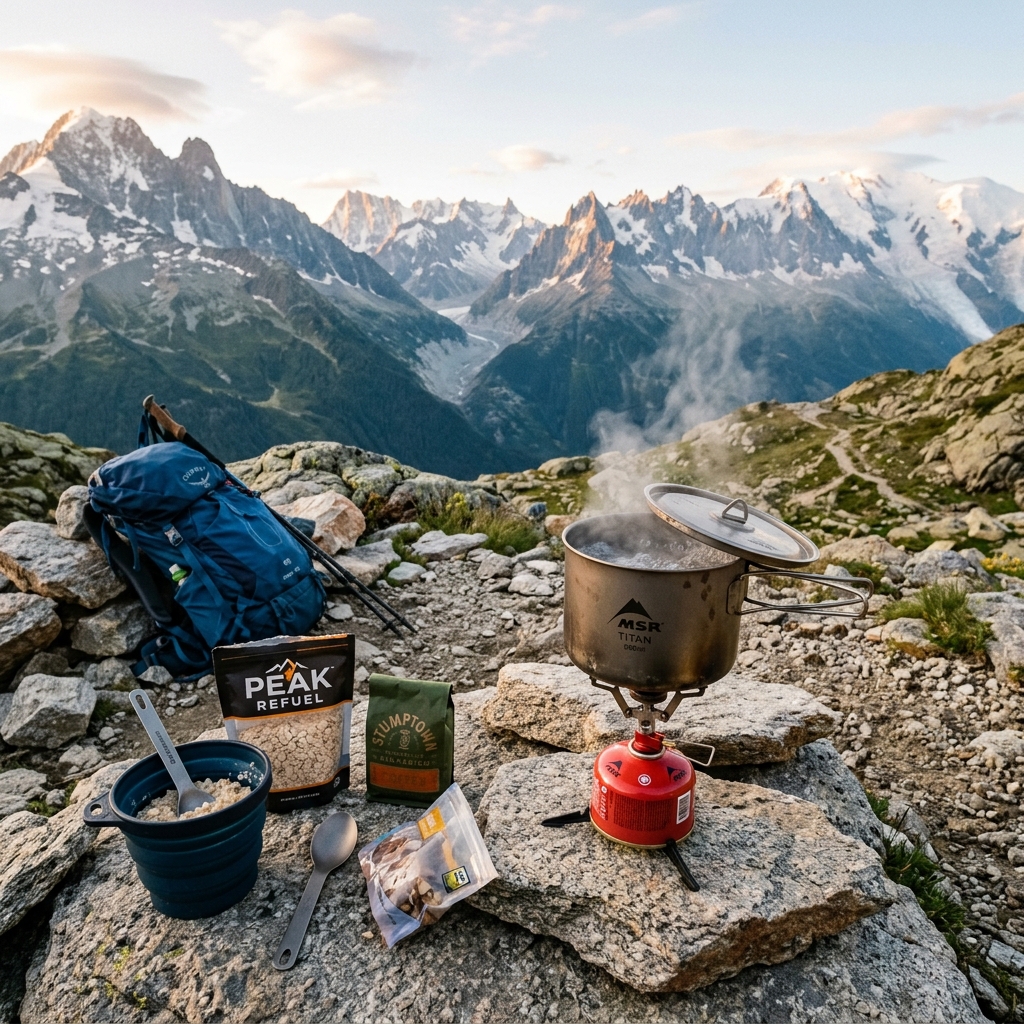 Morning is when the camp stove earns its place in the pack. Coffee before everything else.
Canister stove performance notes:
- Fuel efficiency drops significantly in cold weather and at altitude
- Keep fuel canisters warm (sleeping bag, pocket) overnight in cold conditions
- Always test ignition before leaving home — piezo igniters corrode and fail; carry a lighter regardless
Campfire Cooking
Campfire cooking requires fire that's appropriate — a raging bonfire is the wrong tool. The ideal cooking fire is a hot bed of coals, not active flames. Build your fire, let it burn down 30–45 minutes, and cook over coals. This gives you more consistent, manageable heat.
Campfire cooking equipment worth having:
- Cast iron skillet (heavy but unmatched performance over fire)
- Long-handled tongs
- Adjustable grill grate if your fire ring doesn't have one
- Heavy-duty aluminum foil
- Long cooking fork or skewers
Before you build a campfire: Check current fire restrictions for your area. Many regions restrict or prohibit campfires seasonally based on fire danger. The US Forest Service and airnow.gov publish current restrictions. Always cook on a stove during fire restrictions, even if the campground has fire rings.
Meal Planning: The System That Works
Camp food goes wrong when it's planned at the grocery store without thinking through logistics. The system:
1. Calories before taste Activity increases caloric needs significantly. A day of moderate hiking burns 3,000–4,000 calories. Plan for 600–900 calories per meal plus 300–500 in snacks. Under-eating at camp leads to cold, irritable, poor-decision-making campers.
2. Minimal prep, maximum flavor The best camp meals have most work done at home. Pre-chop vegetables, pre-mix spice blends, pre-measure dry ingredients into labeled bags. At camp you're assembling and cooking, not prepping.
3. Plan around your stove's capability A single-burner stove cooks one thing at a time. Plan meals that make sense sequentially — pasta cooks first, sauce warms in remaining heat. Multi-course meals on one burner require sequencing.
4. Refrigeration doesn't exist Everything you put in a cooler needs to be considered potentially unsafe after 2–3 days without ice. Plan perishables (fresh meat, dairy, eggs) for nights 1 and 2, then transition to shelf-stable ingredients.
Breakfast
The Gold Standard: Camp Oatmeal
Fastest, most calorie-dense, most customizable hot breakfast. Boil water, add quick oats, add butter (yes, real butter at camp — calories matter), brown sugar or honey, and any combination of: dried fruit, nuts, seeds, chocolate chips, peanut butter.
Ratio: 2 cups water to 1 cup oats. Cook on stove until thick, about 3 minutes.
Scrambled Eggs (Days 1–2)
One egg per person, pre-cracked into a sealed container at home (easier and more compact than whole eggs). Add powdered milk, a splash of water, salt and pepper. Cook in a buttered cast iron or non-stick camp pan over medium heat.
Variations: Add pre-cooked sausage crumbles (shelf-stable at camp for 2 days), pre-chopped peppers, or cheese.
Pancakes
Use a pre-mixed pancake powder (just-add-water variety). Bring a small bottle of syrup or maple-flavored agave. Cook in buttered skillet over medium-low flame — camp stoves run hot and burn pancakes faster than you expect.
Coffee and Tea
This matters enormously for camp morale. Options by weight and complexity:
- Instant coffee (Starbucks Via, Mount Hagen Organic): adequate, ultralight
- Pour-over cone + ground coffee: excellent, minimal gear
- Camp press (e.g., GSI Ultralight Java Drip): best balance of pack weight and quality
- Aeropress: the serious option for camp coffee enthusiasts
Lunch
Lunch at camp is almost always eaten on the trail or sitting in the sun somewhere. It needs to be no-cook, no-refrigeration, and portable.
The non-perishable lunch kit:
- Nut butter (individual packs avoid the jar) + crackers or tortillas
- Hard cheese (aged parmesan, cheddar, gouda) — holds well for 2–3 days unrefrigerated
- Salami or pepperoni sticks (shelf-stable cured meats)
- Mixed nuts and dried fruit
- Jerky
- Energy bars (Clif, RX, ProBar)
- Instant ramen eaten as a cold noodle with soy sauce and sesame oil packet (surprisingly good)
Dinner
One-Pot Pasta
The most reliable camp dinner. Use pasta that cooks in 8 minutes or less (penne, rotini, angel hair). Bring a packet of pesto, marinara, or alfredo sauce. Add olive oil, parmesan (dried), and optionally pre-cooked sausage.
Method: Boil water (4 cups per 8oz pasta), add pasta, cook per package directions, drain (use a lid to hold pasta in pot while pouring off water), stir in sauce and parmesan.
Freeze-Dried Meals
Mountain House, Backpacker's Pantry, Good To-Go — the quality of freeze-dried camping food has improved significantly in the last decade. Boil water, add to pouch, wait 8 minutes, eat from the pouch. Best for backpacking or situations where pack weight matters.
What to know: Serving sizes on freeze-dried pouches are frequently inadequate for active campers. Buy "2-serving" pouches for one hungry person.
Foil Packet Meals (Campfire)
One of the most satisfying campfire cooking experiences. Every ingredient wraps in aluminum foil and cooks directly in the coals — minimal cleanup, infinite variation.
Classic foil packet:
- Cubed potatoes, sliced onions, bell peppers
- Sausage or pre-cooked chicken
- Olive oil, salt, pepper, garlic powder
- Wrap tightly in two layers of heavy foil
- Cook in coals 20–25 minutes, turning once
Foil packet tips: Double-wrap to prevent leaks. Rotate to cook evenly. Test doneness by squeezing gently — vegetables should yield. Let cool slightly before opening (steam burns).
Chili (Car Camping)
Pre-make at home and refrigerate or freeze. Pack in a sealed container. Reheat on the stove for dinner night one or two. Serve with rice (instant rice cooks in 5 minutes) or tortillas. Add toppings: shredded cheese, sour cream (days 1–2), sliced scallions.
Campfire Grilling
Bring a grill grate that fits over your fire ring. Pre-marinate meat at home. Cook over hot coals (not flames) to medium/medium-well — camp conditions make food safety judgment harder without a thermometer. Bring a meat thermometer on any trip with whole-cut meats.
Camp Kitchen Setup: Organization Matters
A disorganized camp kitchen leads to: forgetting ingredients, cross-contamination, and wildlife incidents (bears attracted to food smell).
The bear-aware kitchen:
- Cook at least 200 feet from sleeping areas (varies by campground — follow posted rules)
- Store ALL food, cooking gear with residue, scented items, and trash in your car, bear box, or bear canister when not cooking
- Never leave food on the table unattended, even briefly, in bear-active areas
Organization system:
- One dry bag for stove, fuel, utensils, and cookware
- One dry bag for breakfast ingredients
- One dry bag for dinners
- One bag for snacks and lunch items
- Trash bag stored with all food gear
Water Management
Dishwashing at camp: Use minimal soap (biodegradable only). A three-basin system: wash (hot soapy water), rinse (clean water), sanitize (a few drops of bleach per gallon, or hot water). Dispose of gray water in a dispersal area at least 200 feet from water sources — scatter it broadly, don't pour in one spot.
Coffee/tea water: Use filtered or treated water if your campground source is uncertain.
Quick Reference: Calorie-Dense Camp Foods by Weight
| Food | Calories per oz | Notes |
|---|---|---|
| Olive oil | 239 | Highest calorie density available |
| Nut butter | 166 | Individual packs avoid mess |
| Nuts (mixed) | 175 | Walnuts, almonds, cashews |
| Dark chocolate | 163 | Also good for morale |
| Salami | 120 | Shelf-stable for 5+ days |
| Hard cheese | 115 | Parmesan holds longest |
| Oats | 110 | Best calorie-to-weight breakfast option |
| Freeze-dried meals | 100–120 | Varies significantly by meal |
Avoiding the Most Common Camp Cooking Mistakes
Not testing your stove before the trip. Piezo igniters fail. Canister connections corrode. Test at home.
Forgetting cooking fuel. Check your canister before every trip. A 100g canister gives roughly 60 minutes of boil time. A 230g canister handles a long weekend for two people.
Underestimating water needs for cooking. Pasta, oatmeal, freeze-dried meals — everything needs water. Plan for cooking water separately from drinking water.
Cooking inside the tent in rain. This is a significant fire and carbon monoxide risk. Cook under a tarp or in a vestibule with both doors cracked. Never use a camp stove inside an enclosed tent.
Assuming the campfire will always be available. Fire restrictions are increasingly common and can be implemented with no notice. Always have your stove and fuel as a backup, even if you planned to cook over fire.
Camp cooking gets better with every trip. The first trip you're figuring out the system. The second trip it starts to feel natural. By the third, you're the person at the campsite with something genuinely delicious happening on the stove, and other campers are wondering what smells so good.