

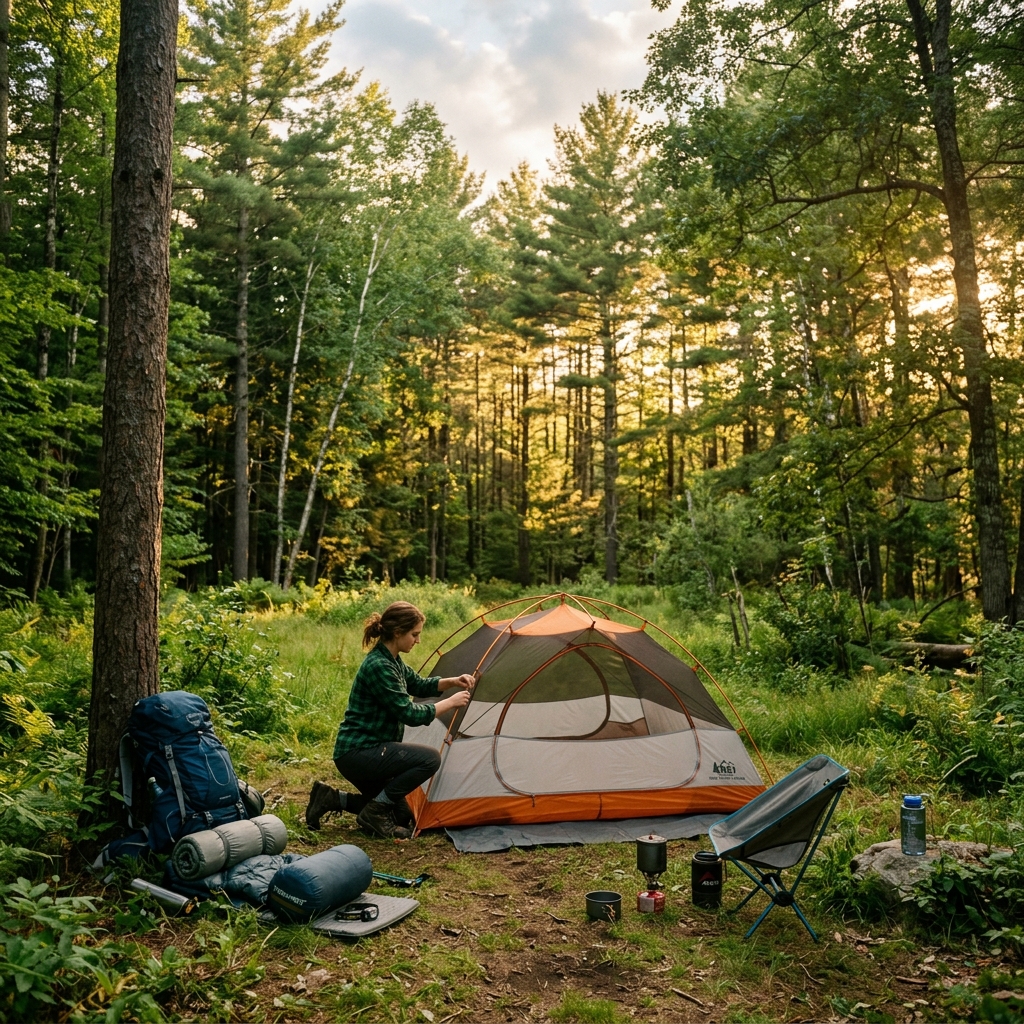
Going camping for the first time can feel overwhelming. What gear do you actually need? How do you set up a tent? What do you eat? Where do you even go?
The good news: camping is one of the most forgiving outdoor activities to learn. You don't need expensive gear, advanced skills, or a week of preparation. You need the basics, a destination, and a willingness to figure things out as you go.
This guide covers everything — from booking your first campsite to sleeping comfortably on night one.
Step 1: Pick the Right Type of Campsite
Not all camping is the same. For your first trip, the goal is to make it easy. That means choosing a developed campsite — a designated spot with established amenities.
Developed (Front-Country) Camping This is the entry point for most campers. You drive to the campsite, park next to your tent pad, and have access to bathrooms and running water. National Forests, State Parks, and the National Park Service all offer developed sites. AATW's Explore Map makes it easy to find and book these.
For your first time: book a developed campsite. It removes 90% of the uncertainty.
Dispersed Camping On most National Forest land, you can camp anywhere that isn't explicitly closed — no designated site, no fee, often no amenities. It's great for solitude but better suited to campers with more experience.
Step 2: The Gear You Actually Need
You don't need to buy everything. Borrow what you can, rent what you can't, and only buy what you'll use again.
The Core Four:
| Item | What to Look For |
|---|---|
| Tent | 3-season, fits your group size + 1, freestanding |
| Sleeping Bag | Rated 10–15°F lower than the coldest night you expect |
| Sleeping Pad | Foam or inflatable; critical for warmth from the ground |
| Headlamp | At least 100 lumens; always bring a spare battery |
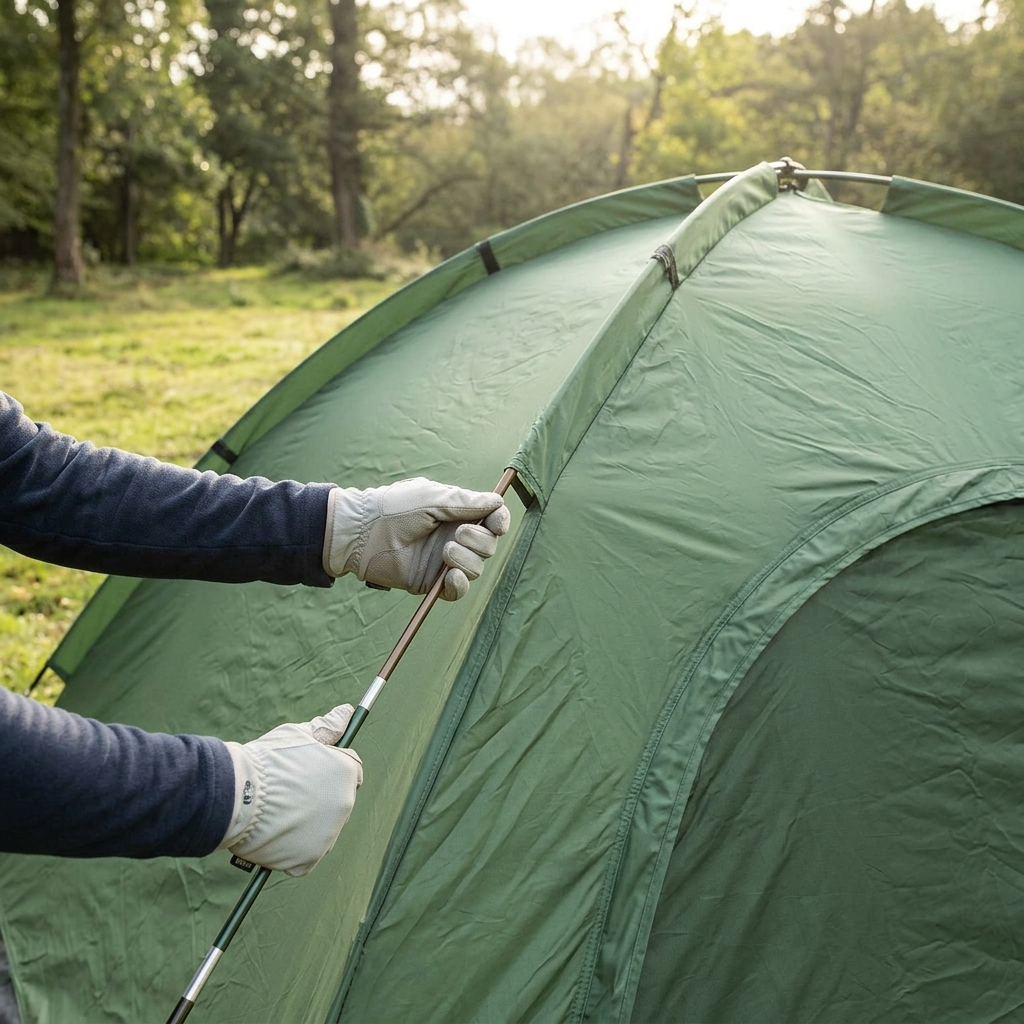 Getting the poles in before dark is a rite of passage. Practice at home first.
The Supporting Cast:
- Camp stove and fuel canister (or plan to cook over a fire)
- Cookpot, spork, and camp mug
- Water filter or purification tablets
- First aid kit
- Dry bags for rain protection
- One extra layer more than you think you'll need
Step 3: Sleeping Warm is the #1 Priority
Most uncomfortable camping experiences come down to sleeping cold. Getting your sleep system right is the most important thing you can do.
Sleeping Bag Temperature Ratings Bags are rated by their "lower comfort limit." If the bag says 30°F, that means it performs adequately at 30°F in lab testing — not cozy at 30°F. Add a 10–15°F margin of safety when buying.
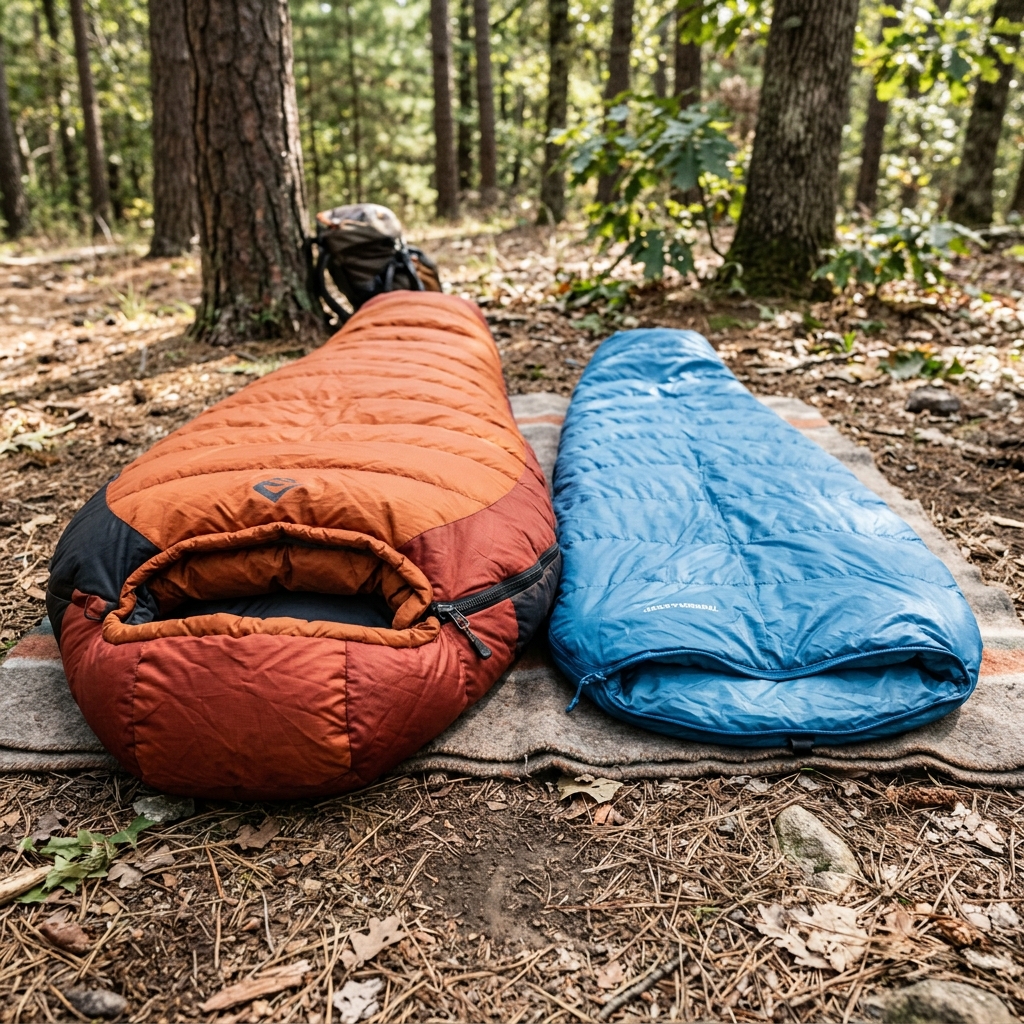 A three-season bag versus a cold-weather bag. The difference in loft tells the story.
The Sleeping Pad is Non-Negotiable The ground pulls heat from your body through conduction far faster than cold air. A sleeping bag alone is not enough — you must have a pad underneath. A closed-cell foam pad (Therm-a-Rest Z Lite, ~$50) is bombproof and works in any condition.
Layering at Night Sleeping in a light merino wool or synthetic base layer adds 5–10 degrees to how warm you sleep. A beanie makes a bigger difference than you'd expect.
Step 4: Food and Water
Water At developed campgrounds, potable water is typically available. Still, always carry at least 2 liters per person. If water quality is uncertain, use a filter (Sawyer Squeeze) or purification tablets. Never drink unfiltered water from streams or lakes.
Camp Stove Cooking A canister stove (MSR PocketRocket 2, Jetboil) is the easiest way to cook at camp. Boil water for instant oatmeal, freeze-dried meals, or ramen.
Campfire Cooking If fires are permitted, cooking over a fire is one of camping's real rewards. Check fire restrictions before you go — many areas restrict or ban campfires seasonally.
Step 5: Setting Up Camp
Arrive early. Learning tent setup in the dark is significantly harder. Aim for 2–3 hours before sunset.
Tent placement rules:
- Choose flat, level ground — a slight slope means rolling off your pad at 3am
- Clear sticks and rocks from under the tent footprint
- Orient the door away from prevailing wind
- Avoid camping directly under dead trees ("widow makers") or in dry creek beds
Step 6: Safety Basics
Wildlife Store all food, scented items (toiletries, lip balm, sunscreen), and trash in your car, a bear box, or bear canister when not in use. Never store food in your tent.
Fire Safety Never leave a campfire unattended. Before sleeping, drown the fire completely with water, stir the coals, and drown again until you can hold your hand over the ashes comfortably.
Weather Awareness Check the forecast before you leave. Afternoon thunderstorms are common in mountain areas. If lightning approaches, get off exposed ridges and away from tall isolated trees.
Step 7: Leave No Trace
The golden rule: leave your campsite cleaner than you found it.
- Pack out all trash, including food scraps
- Fill in any holes you dug
- Disperse dishwater at least 200 feet from streams or lakes
- If there are no toilets, dig a 6–8 inch cat hole at least 200 feet from water, trails, and camp
First Trip Checklist
Sleep System
- Tent (practice setup at home)
- Sleeping bag (temperature appropriate)
- Sleeping pad
Food & Water
- 2L water per person minimum
- Water filter or purification tablets
- Camp stove + fuel
- Cookpot, utensil, mug
- 3 days of food plus snacks
Safety
- First aid kit
- Headlamp + backup batteries
- Downloaded offline map
- Fire starter (lighter + waterproof matches)
Clothing
- Moisture-wicking base layer (no cotton)
- Insulating mid-layer
- Waterproof outer layer
- Extra socks
- Beanie
Camp Hygiene
- Biodegradable soap
- Trowel
- Trash bags
- Hand sanitizer
Ready to find your first campsite? Explore over 45,000 campgrounds and outdoor locations on AATW's Explore Map — and plan your trip with friends using the Trip Planner.