

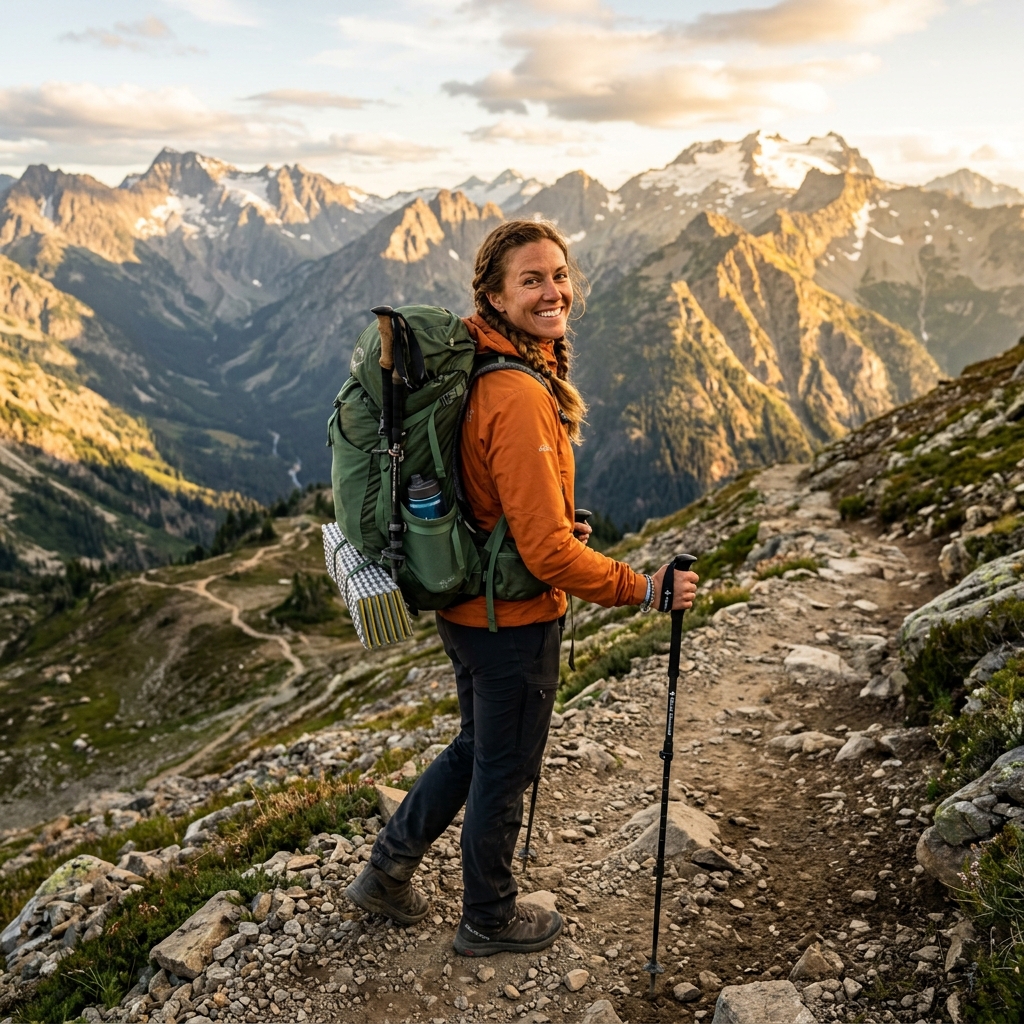
The question comes for most campers eventually: am I ready to go backpacking?
It's a real question. Backpacking — carrying all your shelter, sleep, food, and safety equipment and hiking into the backcountry — is genuinely more demanding than car camping. The margin for error is smaller. The consequences of poor decisions are larger. The rewards are, for many people, proportionally greater.
Here are the honest markers of readiness. Not gear-readiness, which is easier to acquire — actual experience readiness.
Sign 1: You've Car Camped Multiple Times and Know Your Gear
This sounds obvious but is frequently skipped. The biggest risk in backpacking is having things go wrong with gear you haven't used enough to troubleshoot confidently.
Before heading into the backcountry:
- You've used your tent enough to set it up efficiently in less-than-ideal conditions
- You've slept in your sleeping bag in cold temperatures and know it performs as expected
- You've used your stove and know how much fuel it uses, how to light it reliably, and how to cook on it in wind
- You've filtered and drunk water from a natural source with your filter
If you haven't done all of these in a car camping context, do them there first. The backcountry is not the right place to learn that your stove runs out of fuel faster than you thought, or that your sleeping bag is cold at its rated temperature.
Sign 2: You Can Navigate Without Cell Service
Trail navigation is the most critical gap between car camping and backpacking competence.
At a developed campground, you're in a known location with signage, staff, and cell coverage. In the backcountry, navigation is entirely your responsibility. Cell coverage drops out. Trails aren't always obvious. Trail junctions require the ability to interpret a map.
What readiness looks like:
- You've downloaded and used an offline mapping app (Gaia GPS, Avenza Maps) before and know how to orient your position on a map
- You can read a topographic map well enough to understand elevation changes, ridgelines, and drainage patterns
- You know how to use a compass for basic orientation (north, bearing)
- You've practiced reading trail blazes and know what to do when they're missing
You don't need to be an expert navigator. You need to be competent enough to not get irretrievably lost. There's a significant gap between those two things and the first one is achievable.
Sign 3: You Understand Your Physical Limits Accurately
Backpacking requires honest self-assessment. The most common safety incidents occur when people overestimate their fitness relative to the demands of the route.
A day hike is good preparation, but it doesn't simulate backpacking — carrying a loaded pack (typically 25–45 lbs for beginners) changes how your body performs on terrain. Trails that feel easy unloaded become meaningfully harder loaded, particularly uphill and on day two or three when fatigue has accumulated.
What readiness looks like:
- You've taken day hikes of 8–10 miles with elevation gain
- You've ideally done at least one weighted carry (fill a pack to 25–30 lbs and hike a few miles) to understand what it does to your pace and fatigue
- You have a realistic sense of your sustainable daily mileage — not your maximum mileage, your sustainable one over multiple days
- You've experienced turning back from a hike due to conditions or fatigue
That last one matters. The ability to make a turnback decision before an incident is one of the most important backpacking skills there is.
Sign 4: You Know the Principles of Wilderness First Aid
You don't need a Wilderness First Aid (WFA) certification to go backpacking, though it's highly recommended for anyone who goes frequently. What you do need is working knowledge of how to handle the most common backcountry medical situations.
Minimum knowledge base:
- Recognizing and treating heat exhaustion and hypothermia
- Basic wound care and bleeding control
- Recognizing and responding to anaphylaxis (if you or anyone in your group has allergies)
- Blister prevention and treatment
- RICE for minor sprains
- When to self-evacuate vs. call for help
A weekend WFA course costs $200–300 and is one of the best investments a regular backpacker makes. Until then: read the wilderness medicine section of a reliable reference (Wilderness Medicine by Paul Auerbach), carry appropriate supplies, and know when a situation is beyond your skill level.
Sign 5: You've Camped in Conditions, Not Just Good Weather
Fair-weather camping skill doesn't directly translate to backcountry readiness. If you've only camped on mild, clear, warm nights, you haven't yet encountered the conditions the backcountry will actually throw at you.
Before going backpacking, you should have experienced:
- Camping in rain — including setting up and taking down a wet tent, cooking in rain, and managing wet gear
- Camping in cold — genuinely cold nights where your sleep system was tested
- Unexpected weather changes — a day that started clear and went overcast and windy
These experiences build the adaptive competence that backpacking requires. When conditions change in the backcountry, the camper who's already navigated those conditions in a more forgiving context (car camping, short day trips) responds appropriately. The camper who hasn't is surprised, and surprise in the backcountry is when poor decisions get made.
When You Check All Five
If you check all five of these, you're ready. Not ready to do anything in any conditions — but ready to take on a straightforward beginner backpacking route (less than 8 miles per day, established trail, popular area, overnight or two-night).
Some practical first routes:
- Appalachian Trail section hikes near shelters and road crossings
- National Forest trails in high-use areas with recent trip reports
- State Wilderness areas with clear trail maps and shorter access corridors
Go with someone who's backpacked before for the first trip if possible — the compound knowledge is helpful. If going alone, start simpler than you think you need to and build from there.
The backcountry is genuinely wonderful. It's also genuinely less forgiving. Both things are true simultaneously.
Plan your first route using AATW's Explore Map and create a trip in the Trip Planner to coordinate with your hiking partners.